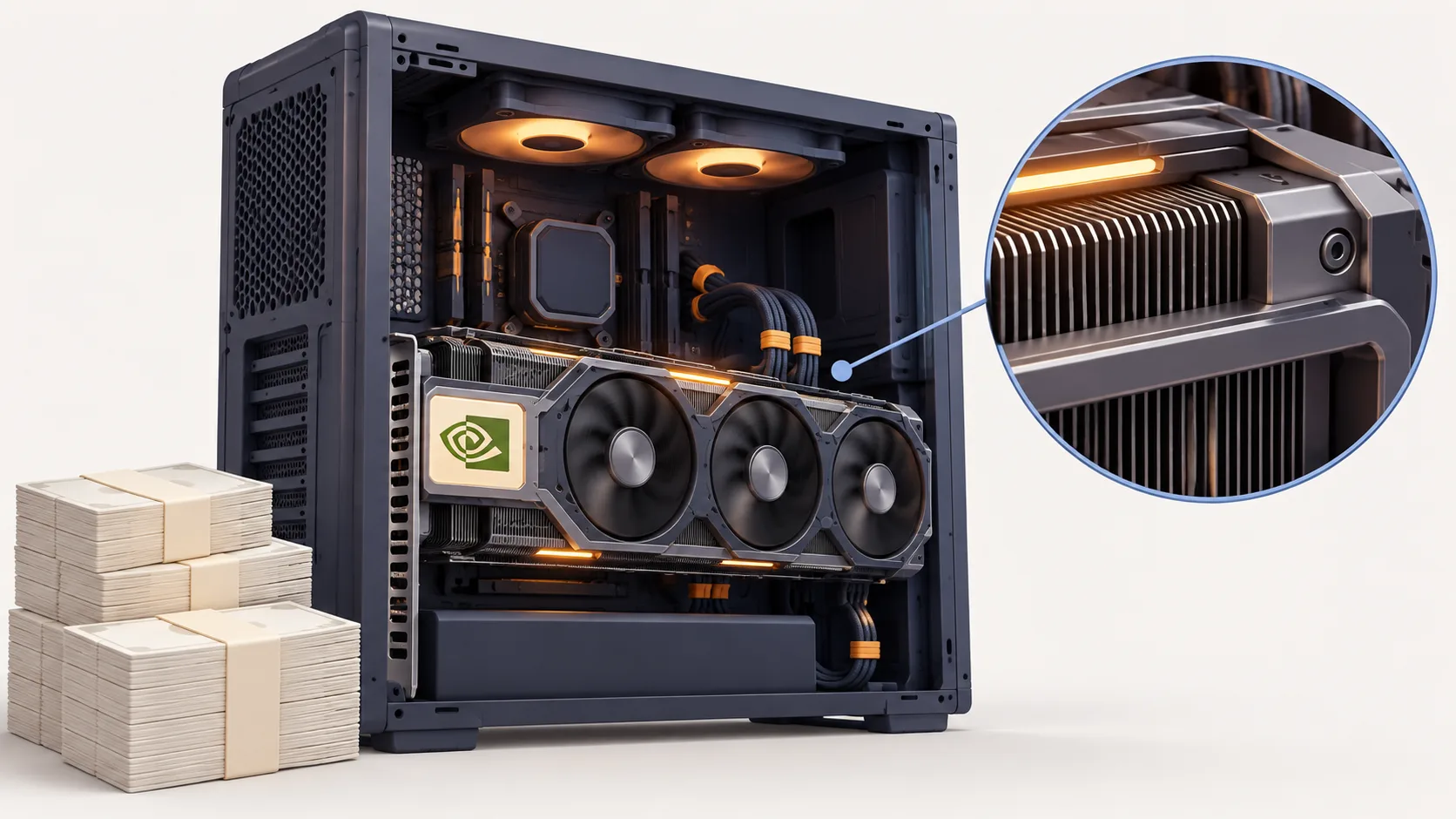

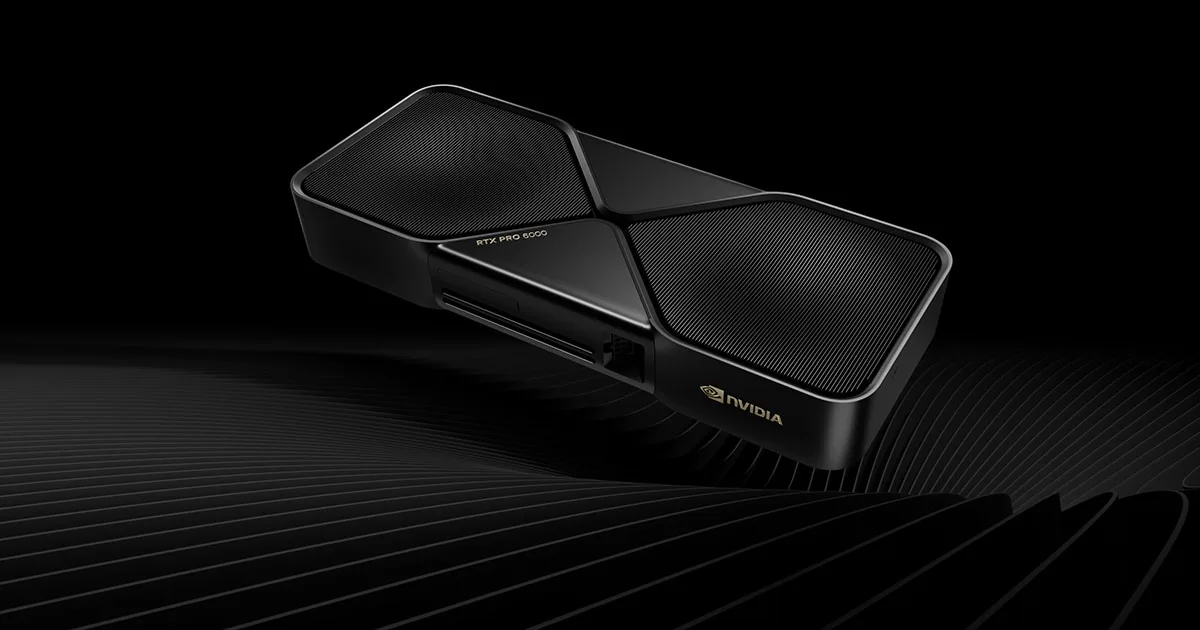
NVIDIA offers a desktop graphics card that sits above the GeForce RTX 5090 on the performance ladder. That card is the RTX PRO 6000 Blackwell Workstation Edition. NVIDIA calls it the most powerful desktop GPU ever created. The hardware is built for people whose needs extend past gaming. NVIDIA prices the RTX PRO 6000 at $16,000 in the US. The price nearly doubles the $8,565 cost from when it launched up from $13,250. NVIDIA did not disclose why it raised the price. The increase arrives during sharply rising memory costs and broader GPU price hikes.
NVIDIA targets the RTX PRO 6000 at AI developers, engineers, 3D artists, and other professionals. The hardware includes 96GB of GDDR7 ECC memory compared to the 32GB of GDDR7 found on the RTX 5090. The card also features 24,064 CUDA cores and a max board power of 600W. Professional workloads can utilize the extra memory, while games do not need the additional 64GB of RAM. The large memory pool supports massive 3D and AI projects, larger datasets, VR environments, and multi-app workflows. Error correction is also more important for serious number crunching or long professional jobs than for gaming frames.
The professional price includes more than just raw hardware specifications. RTX PRO cards receive support from a workstation-focused driver ecosystem. They feature enterprise support and certifications for professional applications rather than the gaming priorities of Game Ready drivers. NVIDIA sold professional graphics hardware under the Quadro brand for over twenty years before switching to RTX professional branding. AMD offers a Radeon PRO line targeting similar workstation users, but the 96GB RTX PRO 6000 sits at the extreme end of the market.
Testing by Tech YouTuber der8auer showed that the RTX PRO 6000 could outperform the RTX 5090 in some games even with workstation drivers. The card was about 14 percent faster in Cyberpunk 2077, about 11 percent faster in Star Wars Outlaws and Remnant 2, and about three percent faster in Assassin's Creed Mirage. Those gaming improvements do not justify the $16,000 price tag when the card costs roughly eight times the original $1,999 price of the RTX 5090. The economics make more sense when the card runs larger AI models locally or handles enormous visualization projects.
Consumers can technically buy the hardware. NVIDIA directs customers to its Marketplace and workstation partners rather than keeping the card behind a velvet rope. Dedicated enthusiasts can own one if they choose. The primary obstacle is why a gamer would invest thousands of dollars into extra memory, professional drivers, and workstation features that games cannot utilize.