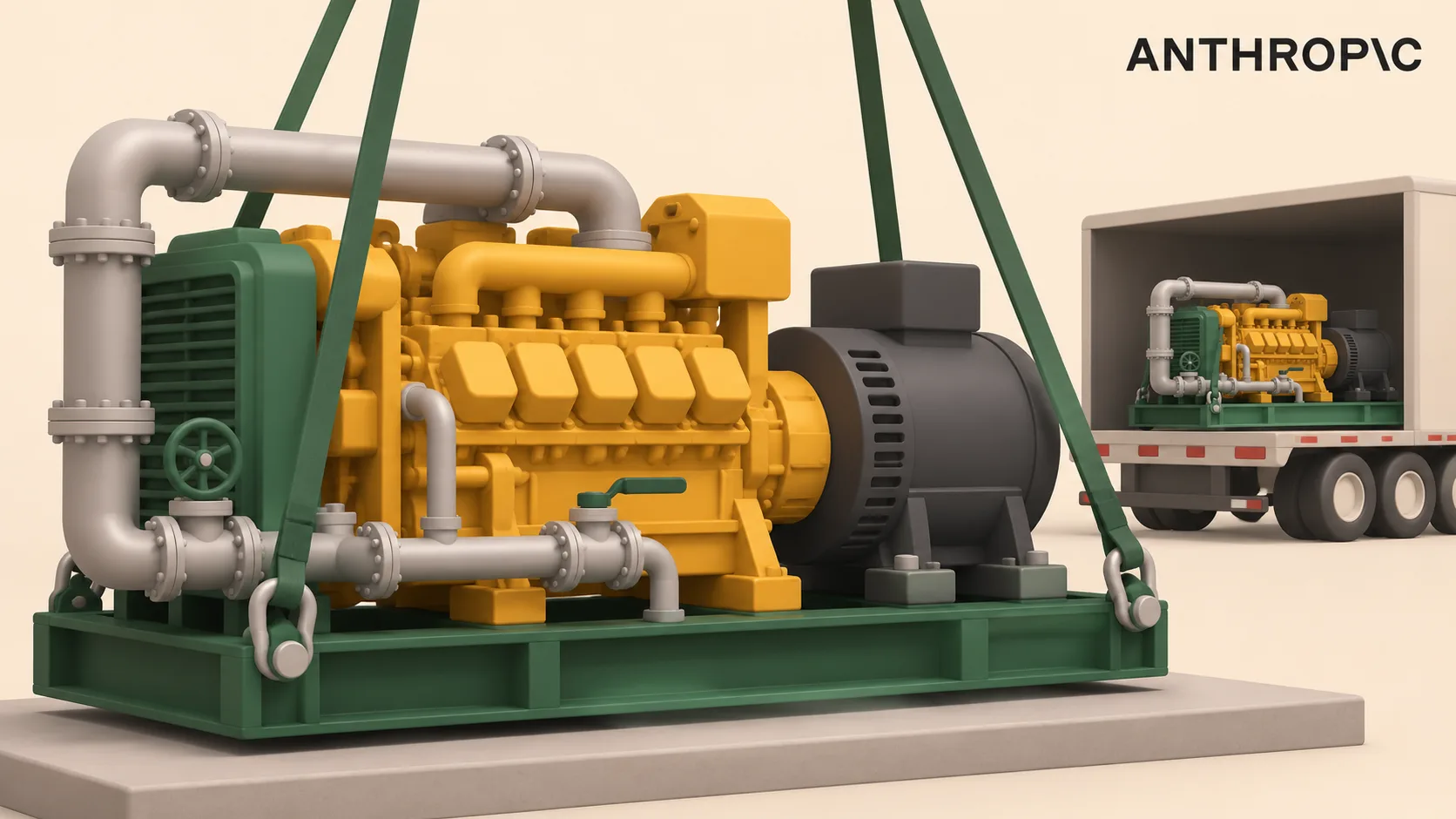

Anthropic is buying $3.4 billion worth of Caterpillar natural gas generators, according to a Financial Times report. The equipment, originally ordered by supplier OnePWR, can produce up to 1.7 gigawatts of electricity.
The purchase marks a change for Anthropic, which has generally rented computing capacity instead of buying physical infrastructure. The AI company is planning to go public this year.
In an S-1 filing in May, Anthropic disclosed that it is paying SpaceX subsidiary xAI $1.25 billion a month for computing power through May 2029. “We expect to enter into additional similar services contracts,” the company said in the filing.
 Read nextAnthropic announces Claude Fable 5.2 and Mythos 5.2
AI companies struggle to secure power
Securing power for AI computing has become difficult. Orders for natural gas turbines are backed up into the early 2030s, while waits to connect to the electrical grid can be similarly long. Those constraints give available generating equipment added value to companies building data centers.
OnePWR placed its turbine order a couple of years ago but could not obtain financing to finish the purchase, according to the report. Anthropic had intended to buy the equipment from OnePWR. It instead went straight to Caterpillar. The report did not establish why OnePWR could not secure financing despite Anthropic’s interest.
Other tech giants turn to natural gas
Other large technology companies are also turning to natural gas. Google, Amazon, Microsoft and Meta have announced plans for large gas plants that would supply their data centers on-site instead of drawing power from the public grid. The surge in demand has also boosted fracking, a method of extracting gas from underground rock.
If the planned expansion goes ahead, U.S. data centers alone could use more natural gas than Germany and Japan combined by 2035. Gas use also leaves companies exposed to changing prices. One analyst expects prices in some markets could more than triple by the end of the decade.
Anthropic’s next stated plans are to go public this year and, as its May filing says, enter more contracts for rented computing power.