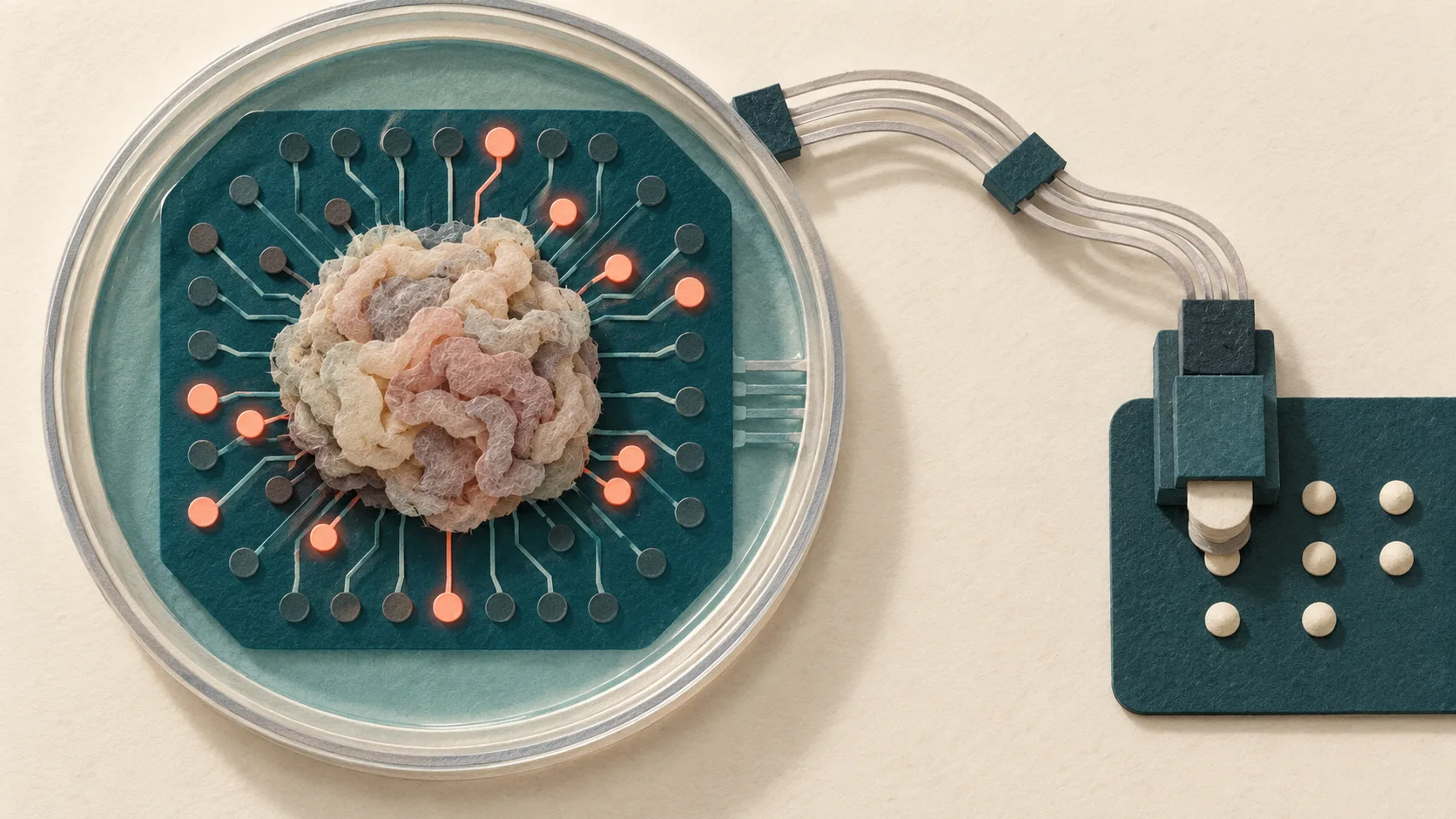

Human brain organoids classified Braille letters after receiving electrical signals from a tactile sensor, according to a study published Friday in Frontiers in Artificial Intelligence. One organoid reached about 61 percent accuracy. A group of three reached 83 percent.
The organoids are living neural tissue grown from stem cells. Each is smaller than a millimeter, and the single organoid in the test contained about 10,000 neurons. Researchers kept them alive on arrays while sending them stimulation patterns based on the 26 letters of the Braille alphabet.
A sensor turned raised dots into signals
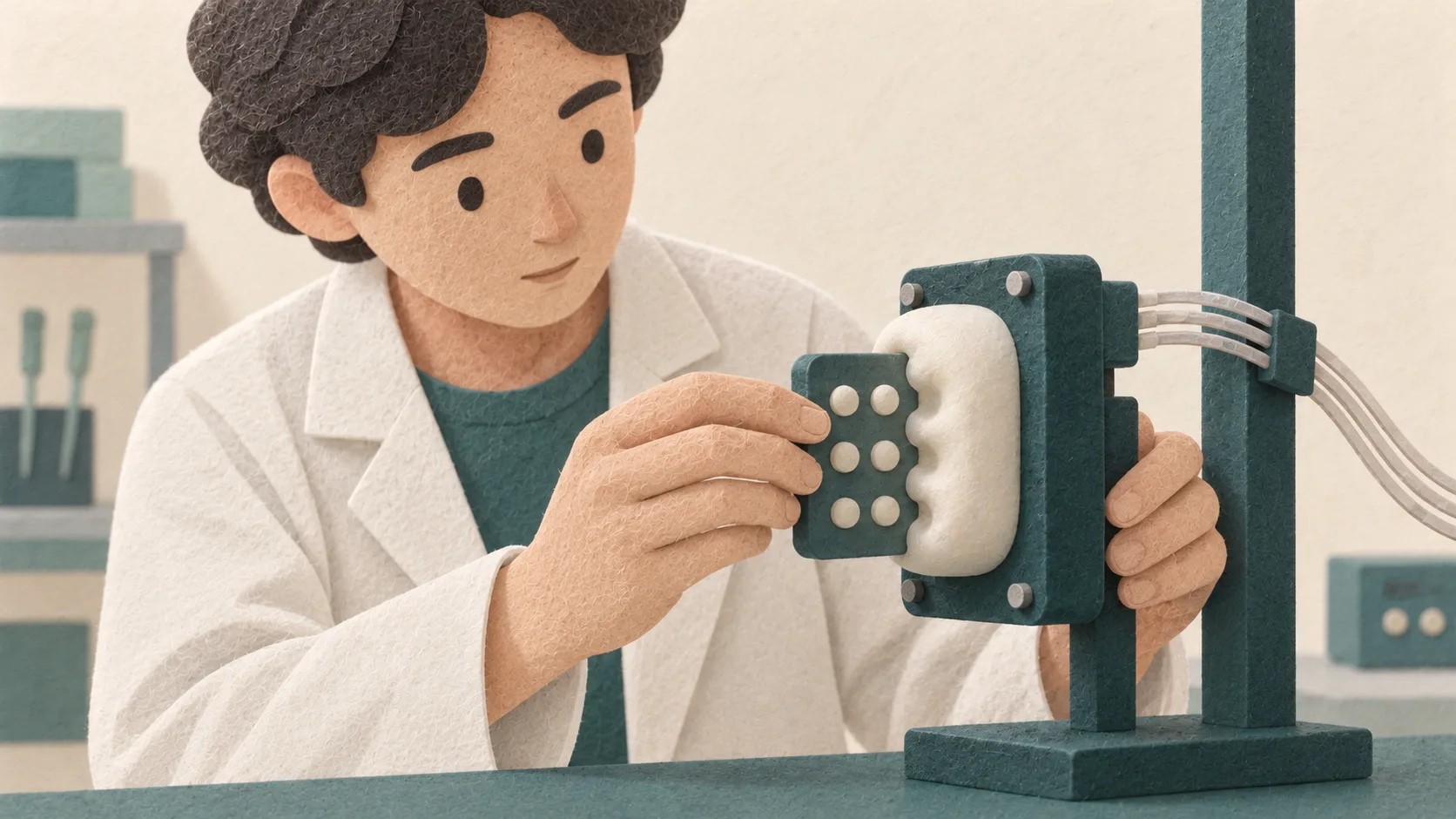
The team used a tactile sensor to scan Braille’s raised-dot patterns, then converted the sensor data into electrical stimulation for the organoids. They tested whether the organoids’ responses could be used to distinguish the letters.
Tianyi Liu, a PhD candidate at Bristol University who led the study, said the goal was to explore whether biological neural networks could help process information from robotic touch sensors. The team chose Braille because its tactile patterns could be converted into signals the organoids could receive.
The work belongs to the emerging field of organoid intelligence, which studies the use of living neural tissue in computing. Earlier research has shown organoids recognizing spoken Japanese vowels and playing Pong.
The test did not show that organoids learned Braille
The researchers do not yet know why three organoids performed better than one. Liu’s hypothesis is that organoids respond to the same stimulation in similar but slightly different ways, allowing their responses to be combined.
This was an open-loop test. The organoids received inputs but got no feedback about their performance. The results therefore do not show that they learned Braille or changed permanently.
 Read nextAI-designed enzymes cut selected protein targets in lab tests
Biological computing also faces practical limits. Organoids vary naturally and require living cultures that are harder to maintain than electronic devices. Liu said they still lag established chips in reliability, reproducibility and scalability.
Liu said a future closed-loop system could feed the results of a robot’s interactions back to its organoids. That would let researchers investigate whether the neural tissue adapts through ongoing interaction.