
Google is pitching Gemini 4 Argon as one model for several stages of robotics work. It can write control code, build simulations for practice and assess training videos. The company says it has improved at spatial reasoning and interpreting the physics shown in video. Google calls it a step toward "physical AGI," a goal it has pursued with DeepMind for years.
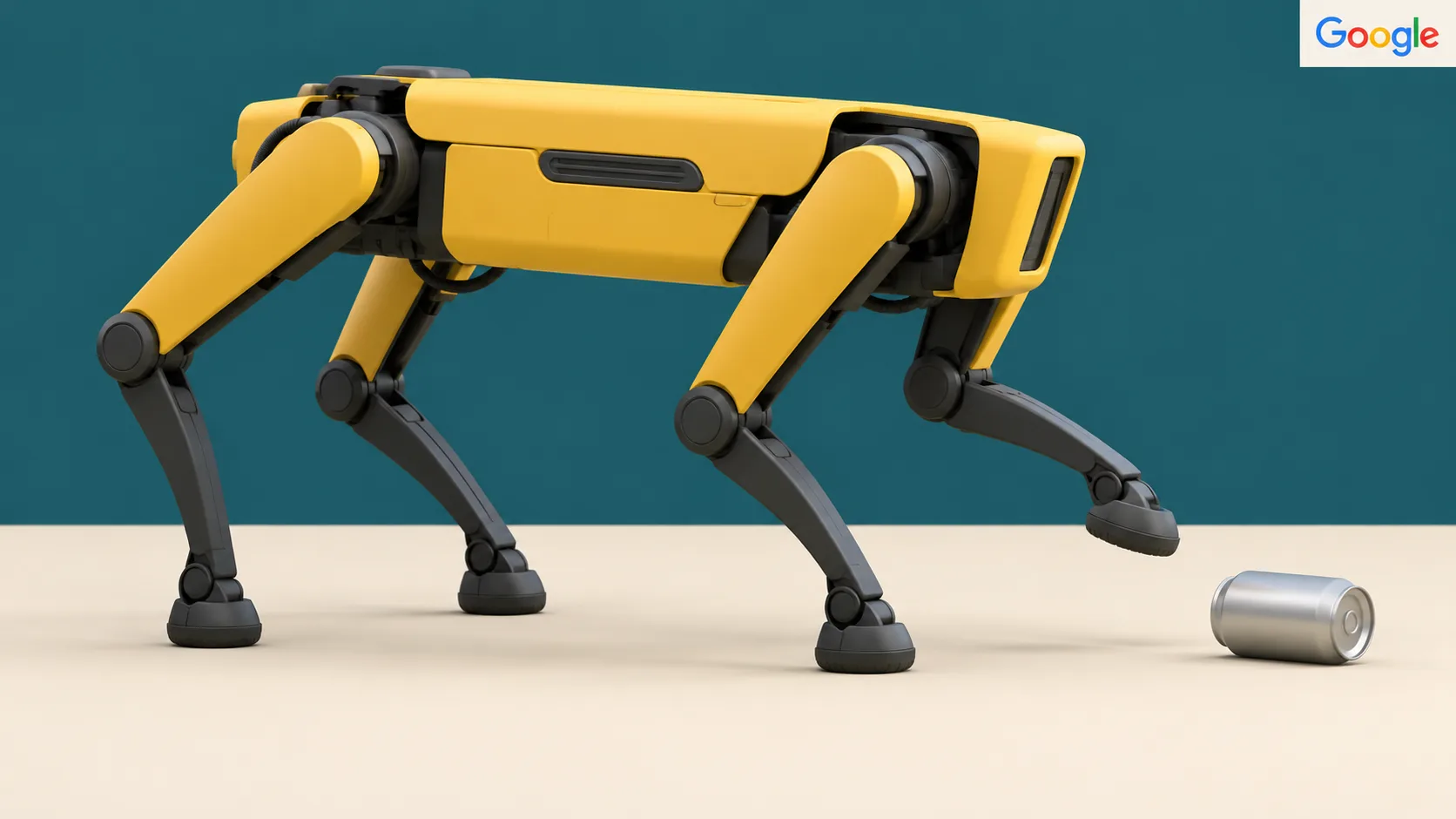
In one demo, a Boston Dynamics Spot robot must put soda cans in a step-on trash bin. Argon first creates a virtual copy of the bin so Spot can practice pressing the pedal while balancing on three legs. The robot then tries the task on real hardware. Before it drops a can, two additional AI agents check the positions of its foot and gripper.
Another demo starts with one photo of a table covered in party props, including a soft plush cap. Argon recreates the scene virtually, devises 77 tasks and produces more than 4,500 training episodes for a control model. On the real robot, the reported success rate rises from 56 to 75 percent, while execution time falls from 35 to 24 seconds.
Argon also builds simulations from a teleoperated robot recording, matching its appearance and fingertip force readings. Given first-person video of a person grasping an object, it maps hand and finger movements to a virtual humanoid with five-fingered hands. A ballpoint pen sketch becomes another simulation: a humanoid throws a ball to knock down all six boxes in a pyramid without falling.
In a demo conducted entirely in generated video, Argon directs Gemini Omni, a video world model that shows how a scene changes after an action. Argon gives it timestamped hand instructions, such as moving a Scrabble tile toward the table’s center. It checks the resulting frames and revises the next instruction. After 33 steps, five scattered tiles spell "ARGON."
A robot arm demo tests whether Argon can improve after a failed attempt to place a Lego brick in a wooden box. Its prompt instructs it to inspect logs and camera images, identify the cause and retry after verifying a fix. The first attempt takes just under a minute. The second takes 23 seconds but clips the box’s edge. On the third, the brick lands in the center after about 17 seconds.
 Read nextGoogle launches Gemini 4 Argon globally with API access and new subscription availability
Benchmarks show different results
Google also uses Argon to recreate published robotics experiments as interactive browser simulations from one prompt per paper. It says it has built 68 so far, including robot soccer and a humanoid on a skateboard. On the 400-question Embodied Reasoning Question Answering benchmark, or ERQA, models receive no helper tools. Google reports Argon at 87 percent, ahead of Claude Opus 5.5 at 82.3 percent, GPT-6 Astra at 81 percent and Claude Fable 5.1 at 74 percent. Those scores put Opus about five percentage points behind Argon and Fable 13 points behind.
Artificial Analysis published its AA-Robotics benchmark a day later. There, language models directly control a real robot arm through eight tasks. Argon places third with 55 out of 100 points, behind GPT-6 Astra at 69 and GPT-6.1 Sol at 65.
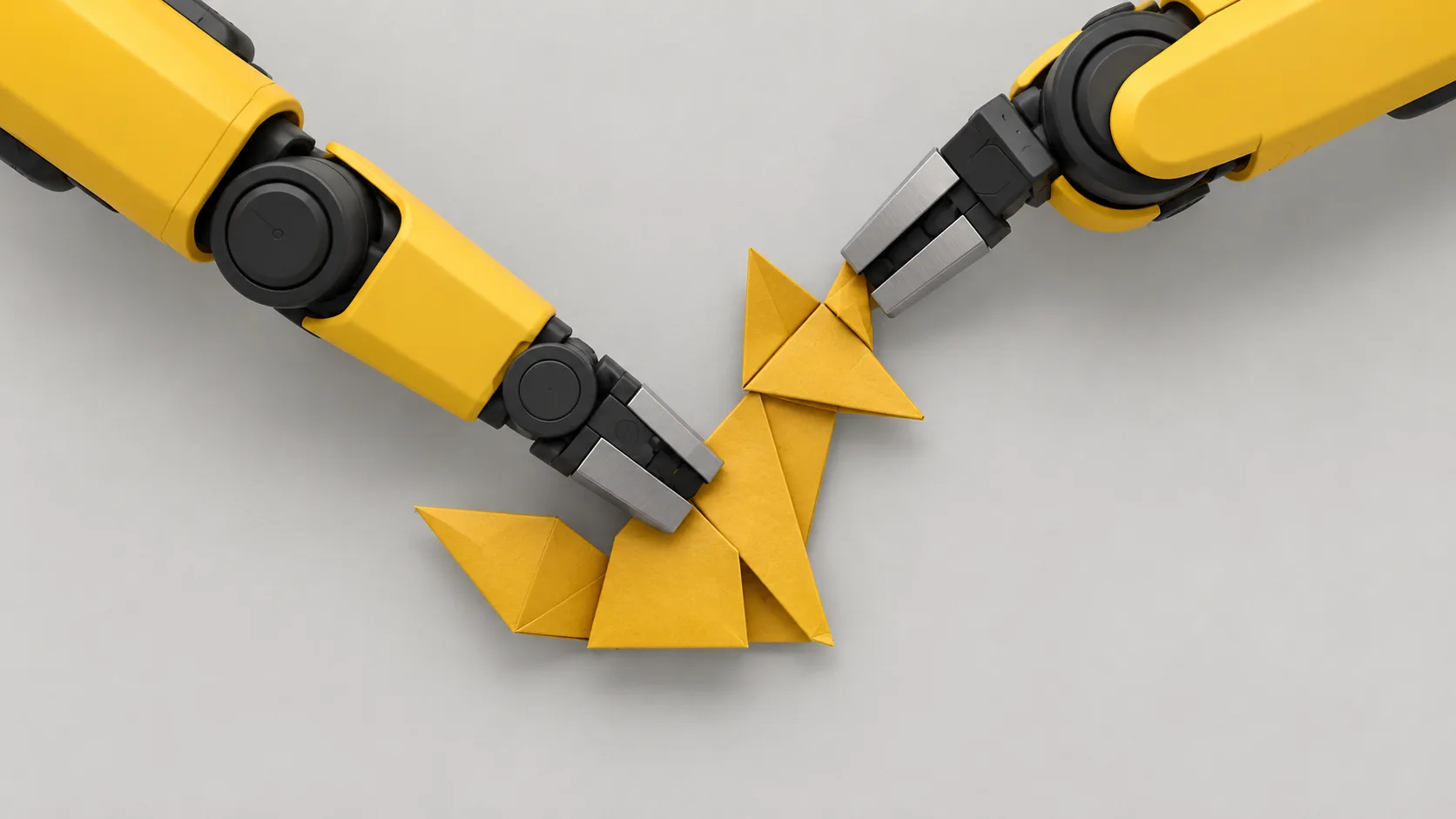
Google also shows Argon evaluating training footage. In a video just over two minutes long, a dual-arm robot folds an origami fox. Argon divides the work into steps and flags pauses and failed grips so those portions receive less weight during training. In a separate video of a person sorting rings, it identifies where progress continues, stalls or reverses. For a classic puzzle involving twelve identical-looking balls, one heavier or lighter than the others, Argon builds a simulation with two robot arms and a balance scale. It reads the tilt from camera images and finds the odd ball in no more than three weighings.
Detailed prompts qualify the demos
Google’s published prompts show the support behind some demonstrations. A cup-righting task described as "zero-shot" provides a camera image with a centimeter grid and ready-made commands such as "grasp" and "lower until contact." Simulation prompts include long lists of prohibited shortcuts, including copying measured sensor values. Google gives no failure rates for individual demos in its blog post. It also does not say how many attempts underpin the 75 percent success rate.
Google released Gemini 4 Argon globally just days earlier. It had already introduced Gemini Robotics-ER 1.6 for spatial perception and task planning. Virtual robot training also predates Argon: World Labs has shown virtual training worlds made from real scenes, and Nvidia’s DreamDojo simulates robot actions as videos. Google’s broader claim is that one model can handle simulation, control and evaluation. Argon is now available in Google AI Studio and Antigravity for Google AI Ultra subscribers. Developers can also access it through the paid tier of the Gemini API.