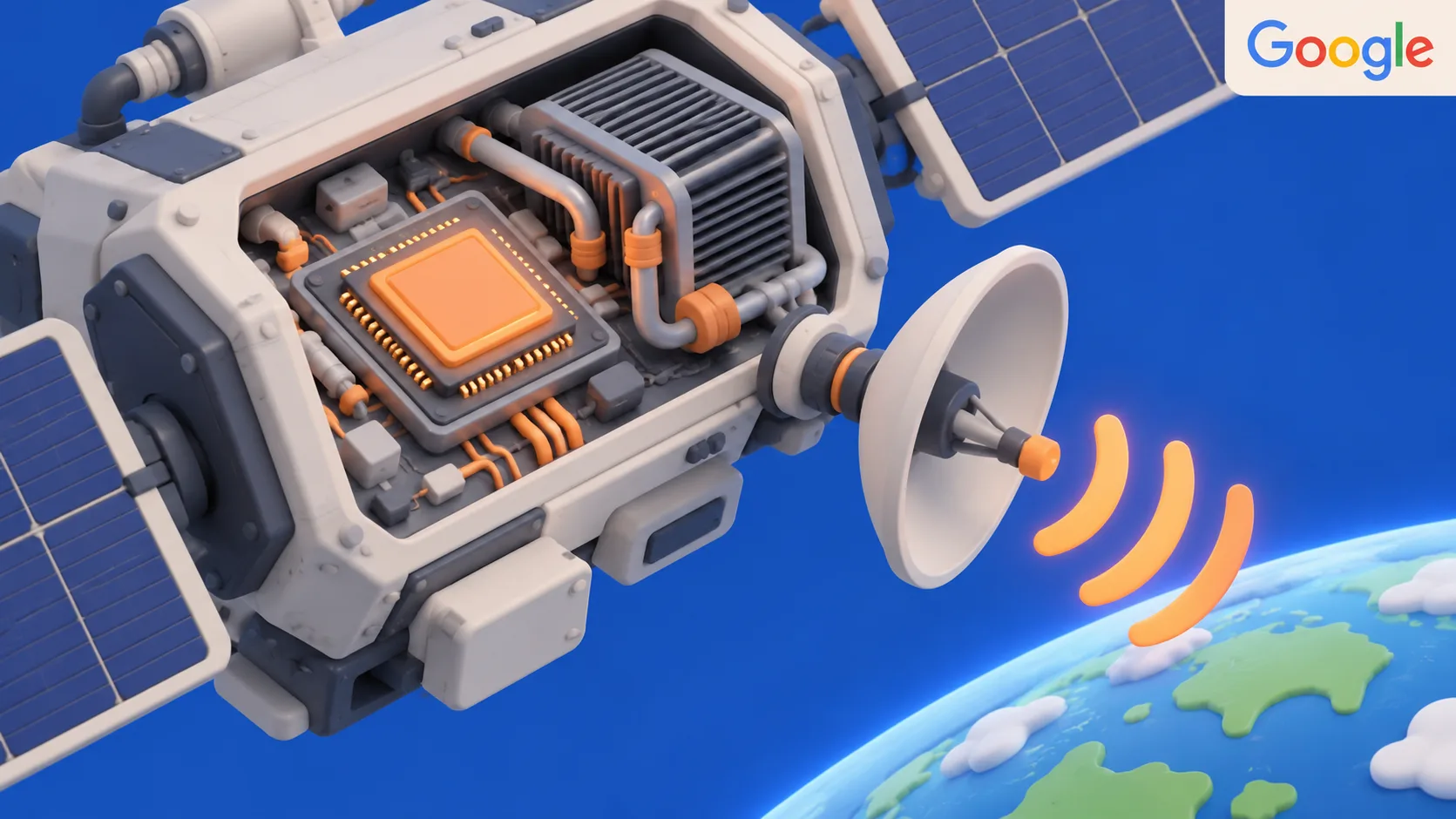

Google says its Project Suncatcher prototype satellite has returned an AI response from a data center class TPU in orbit. The satellite launched on October 1 as part of the company’s research into powering AI computing in space.
During a ground-station pass, the team sent a prompt to the onboard Gemma 4 open model, asking it to write a haiku about being in space. The satellite sent back a poem as it passed Svalbard, Norway. Google calls it the first AI response from a data center class TPU in orbit.
Before that response, Google spent several weeks commissioning the satellite. The work included powering up the host and TPU trays and running early machine learning tests, according to the company.
 Read nextMicrosoft reports wider AI use by North Korean cyber groups
Google says it followed the haiku with prompts for space-themed limericks and telemetry reports on the technical status of the payload systems. These were further tests of the onboard model after the initial response.
Google plans to test TPUs under thermal stress
Next, Google plans to test how TPUs perform under thermal stress and radiation exposure in orbit. The company says verifying that they can run workloads reliably in space would support its next milestone: twin interconnected satellites in 2027.