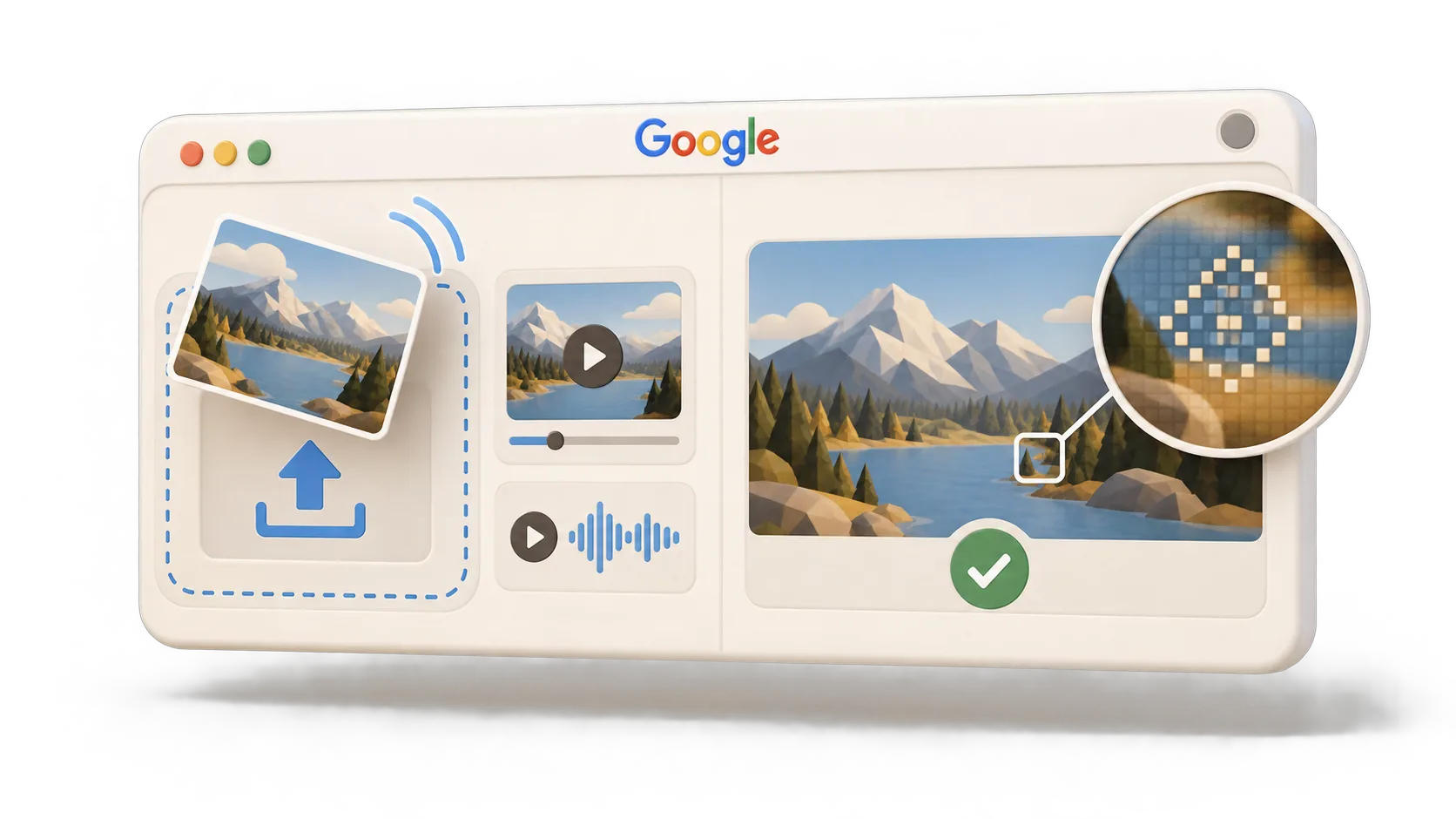
Google makes SynthID Detector available globally
Google DeepMind's SynthID Detector checks uploaded images, audio and video for watermarks from Google and participating AI providers.
Theme
AI watermarking is a technology used to identify AI-generated content, including text, images, video, and audio. Tech companies implement these measures to comply with regulatory standards, such as the European Union AI Act, and to help users verify the authenticity of digital media. Currently, the technology faces several technical limitations. For instance, detection rates for text watermarks drop when the text is edited or when it covers specific subjects like mathematics. Additionally, watermarking AI models can alter agent behavior and safety responses. In the latest developments, Google launched a public website that allows anyone to check if media is AI-generated. This tool utilizes SynthID, a technology also supported by OpenAI, Nvidia, and Kakao, and it supports a wide range of image, video, and audio formats. Meanwhile, OpenAI is adding invisible watermarks to ChatGPT text to meet European Union compliance requirements. While OpenAI makes API watermarking optional worldwide, other companies take a different approach. Furthermore, Microsoft has integrated AI watermarks into its Paint and Photos applications, linking them directly to user IDs.
5 stories · Updated
Google DeepMind's SynthID Detector checks uploaded images, audio and video for watermarks from Google and participating AI providers.
Google released a new website allowing anyone to verify if an image, video, or audio clip is AI-generated.
OpenAI is rolling out invisible text watermarks to comply with EU rules while keeping API watermarking optional worldwide.
Research from Lasso Security reveals that machine-readable watermarks required by the EU AI Act can alter how models handle tools and safety refusals.
Research shows Microsoft embeds a server-issued GUID linked to user prompts into AI images generated in Windows Paint and Photos.