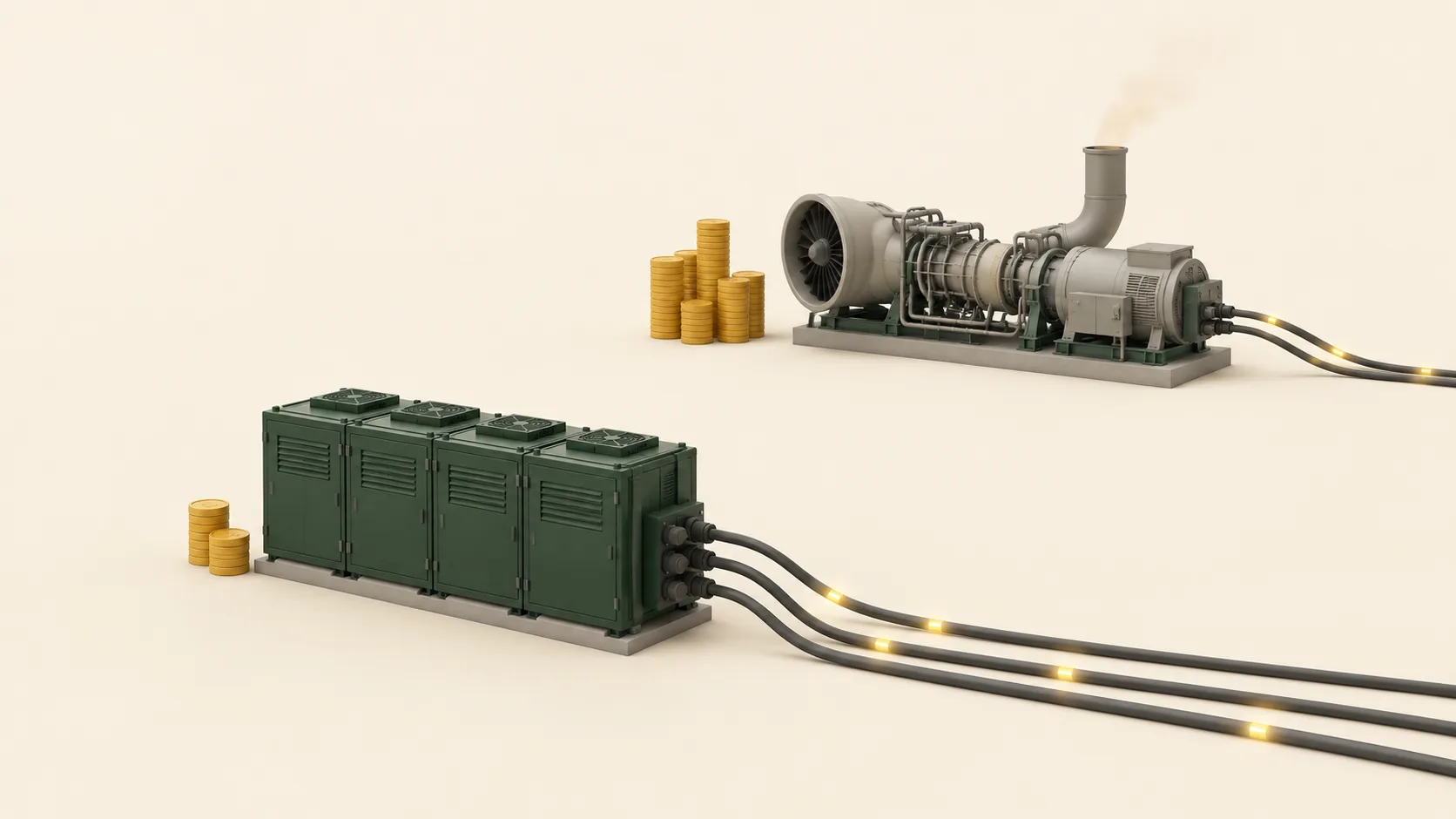

Battery storage is now cheaper than a type of natural gas power plant favored by many data center developers. This finding comes from a new report published by Wood Mackenzie.
Four-hour duration batteries were less expensive than open-cycle gas turbines on every continent and in each of the 43 markets that Wood Mackenzie surveyed. The consultancy predicts that the cost of electricity from batteries will continue to decline. Meanwhile, electrons from gas turbines will only grow more expensive in the coming decades.
Artificial intelligence drives up gas turbine prices
The report lands as energy prices in the United States and elsewhere continue to rise. This trend fuels inflation as data centers push electricity demand to new heights. Prices for gas turbines have been driven up by AI data center developers. These developers have been buying any model they can get their hands on. The effects have been more acute for open-cycle gas turbines. These units are more readily available but less efficient and more expensive to operate.
Open-cycle turbines are often used by utilities as peaking power plants. Peaking power plants step in to generate electricity in periods of high demand. As prices for those turbines rise, it can raise costs for utilities, too.
Procurement backlogs delay new natural gas plants
Open-cycle turbines are simpler to make than closed-cycle turbines. Even open-cycle turbines now take two to four years to procure. Waitlists for closed-cycle turbines now extend into the early 2030s. Both backlogs have been spiking prices for all new natural gas power plants.
That is not the case for every generating technology. Solar is now the cheapest form of new power in every market in the Wood Mackenzie survey.
 Read nextGitHub rebuilds Git storage architecture from scratch to handle AI traffic surge
Tariffs and tax credits complicate solar economics
While solar remains cheapest even in North America, the situation remains complicated there. Solar prices are under pressure from tariffs and import restrictions according to Wood Mackenzie. Utility-scale solar is expected to fare better. In North America, 168 gigawatts is largely protected from those near-term price shocks thanks to safe-harbor provisions in the One Big Beautiful Bill. That legislation kept tax credits for projects that have begun construction or are completed before the end of 2027.
The market for U.S. natural gas will narrow in the coming decade. In the Middle East and Africa, four-hour batteries will be 33 percent cheaper by 2035. This shift will displace gas peaking on cost across every gas market in the region. In China, energy storage costs are 55 percent below its neighbors.
Ahmed Jameel Abdullah, principal analyst at Wood Mackenzie, commented on the shift in a press release. He stated that this economic shift is decisive and widening.