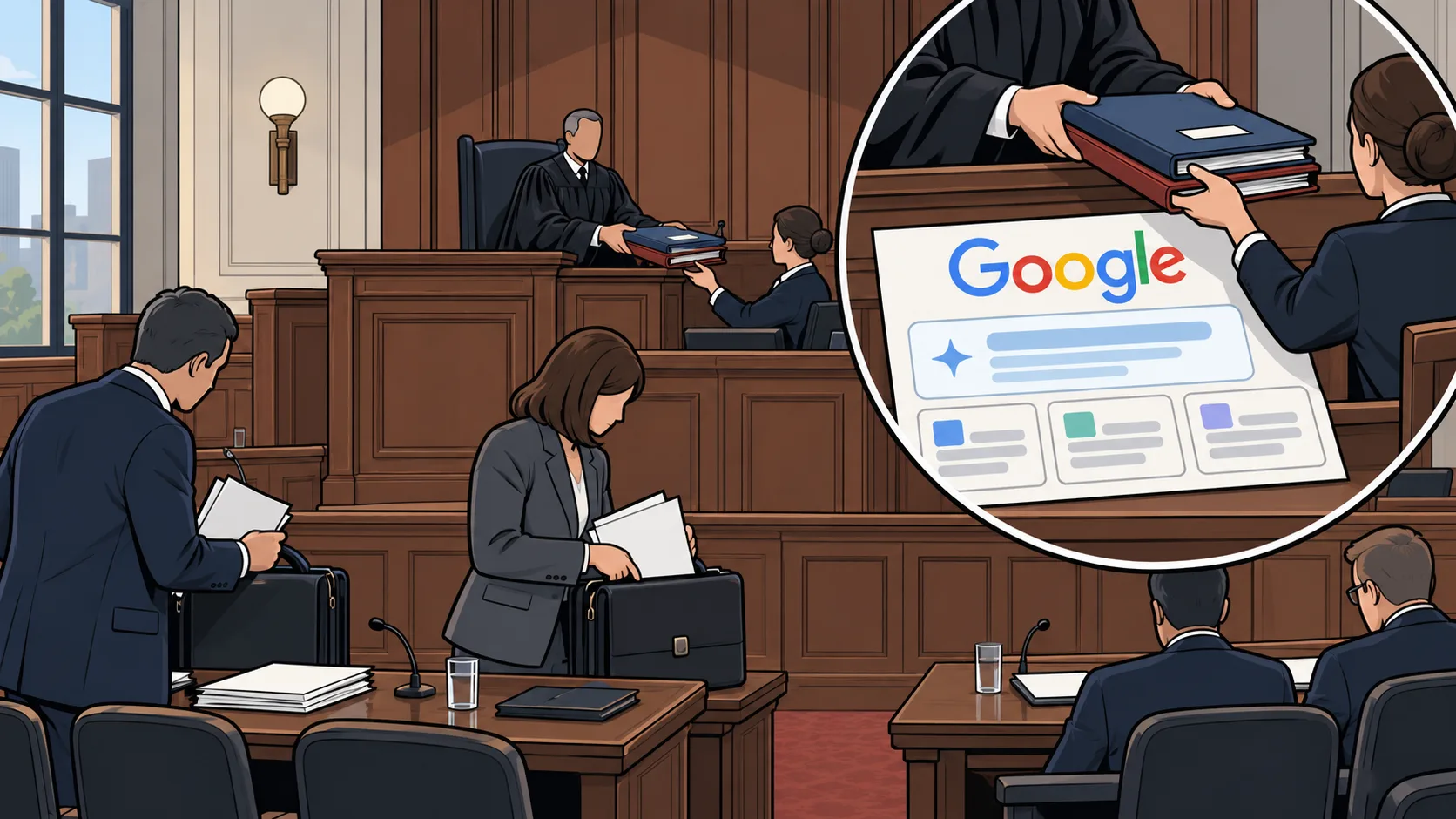

A federal judge dismissed a pair of antitrust lawsuits filed against Google. Chegg and Rolling Stone parent company Penske Media Corporation brought the cases.
The publishers accused Google of driving away web traffic with its AI-powered search features. Reuters reported the dismissal first.
US District Judge Amit Mehta ruled in favor of Google on Wednesday. He wrote that the claims from PMC and Chegg do not stand up to antitrust law.
Publishers alleged Google abused monopoly power
The publishers filed their lawsuits last year. They accused Google of abusing its monopoly power.
According to the complaints, Google coerced publishers into supplying content for AI Overviews for free. Publishers risked disappearing from search results if they refused.
The companies argued that Google diverted traffic away from their sites. They stated this practice hurt their revenue.

Judge ruled traffic expectations do not form agreements
Judge Mehta disagreed with the claims made by Chegg and PMC. He previously made a landmark antitrust ruling against Google in 2024.
Plaintiffs pleaded only that they had an expectation of receiving search traffic for free content, Mehta wrote. He noted that an expectation is not an agreement.
The judge stated that this dynamic is simply how a general search engine works. He added that the court is not unsympathetic to the situation publishers face.
 Read nextGoogle Researchers Develop Watermarking System for AI-Designed Proteins
Antitrust rules cannot replace legislative action
Mehta wrote that antitrust rules cannot replace a legislative body. Lawmakers must decide how to address the economic impact of new innovation.
Meanwhile, publishers continue to see the effects of the search overhaul. Traffic to news outlets and small websites has taken a steep dive.
Google is now paying around 100 publishers for contributions to AI Overviews, AI Mode, and Gemini. The Information reported this week that the payments happen through a pilot program.