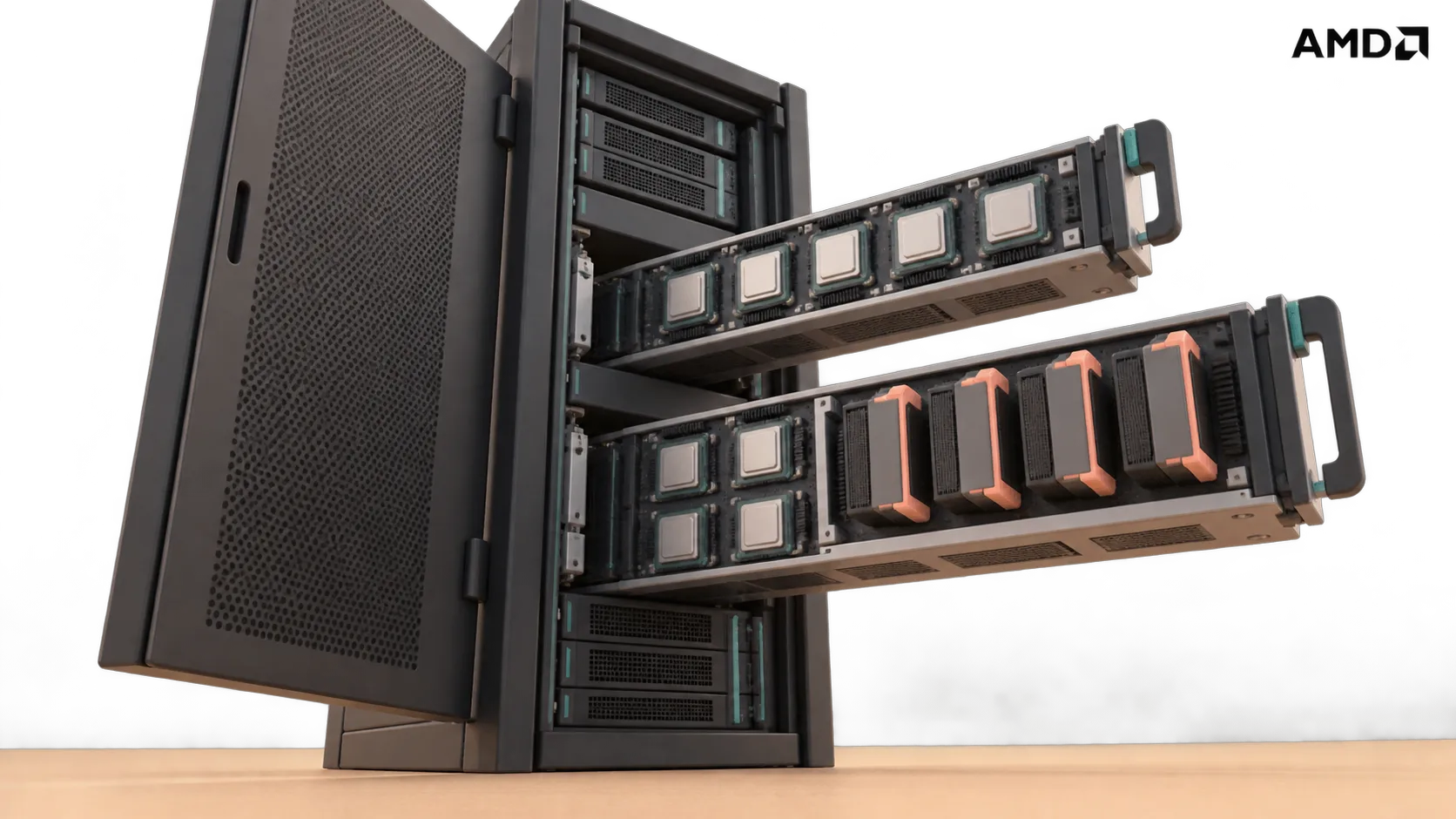

AMD has unveiled Helion, a rack-scale design for running AI agents. It supports CPU-only and mixed CPU/GPU configurations, with air-cooled or liquid-cooled versions. AMD introduced it at the Open Compute Project (OCP) Summit 2026 in San Jose, California.
Helion is an OCP-compliant reference design built around AMD CPUs and accelerators. It joins Helios, which AMD launched earlier in 2026 for frontier-scale AI training and large-scale inference. Helion's enterprise configuration puts agent execution and inference in one rack.
Two configurations serve different workloads
The CPU-only hyperscale configuration provides dedicated capacity for agent execution and connects to separate model inference infrastructure. The enterprise configuration combines agent execution, GPU inference, and supporting workloads in a single rack.
Depending on the configuration, AMD advertises up to 32,768 Zen 6 CPU cores through compute nodes fitted with 256-core Venice EPYC processors. The design also supports up to 16 Instinct MI350P GPU accelerators and up to 102 Tbps of networking bandwidth.
Both configurations offer dense, balanced, and high-performance CPU blades. Dense blades use EPYC 9006 chips rated at 400 W. Balanced blades use 256-core processors rated at 600 W, while performance blades use 96-core chips clocked at 5 GHz.
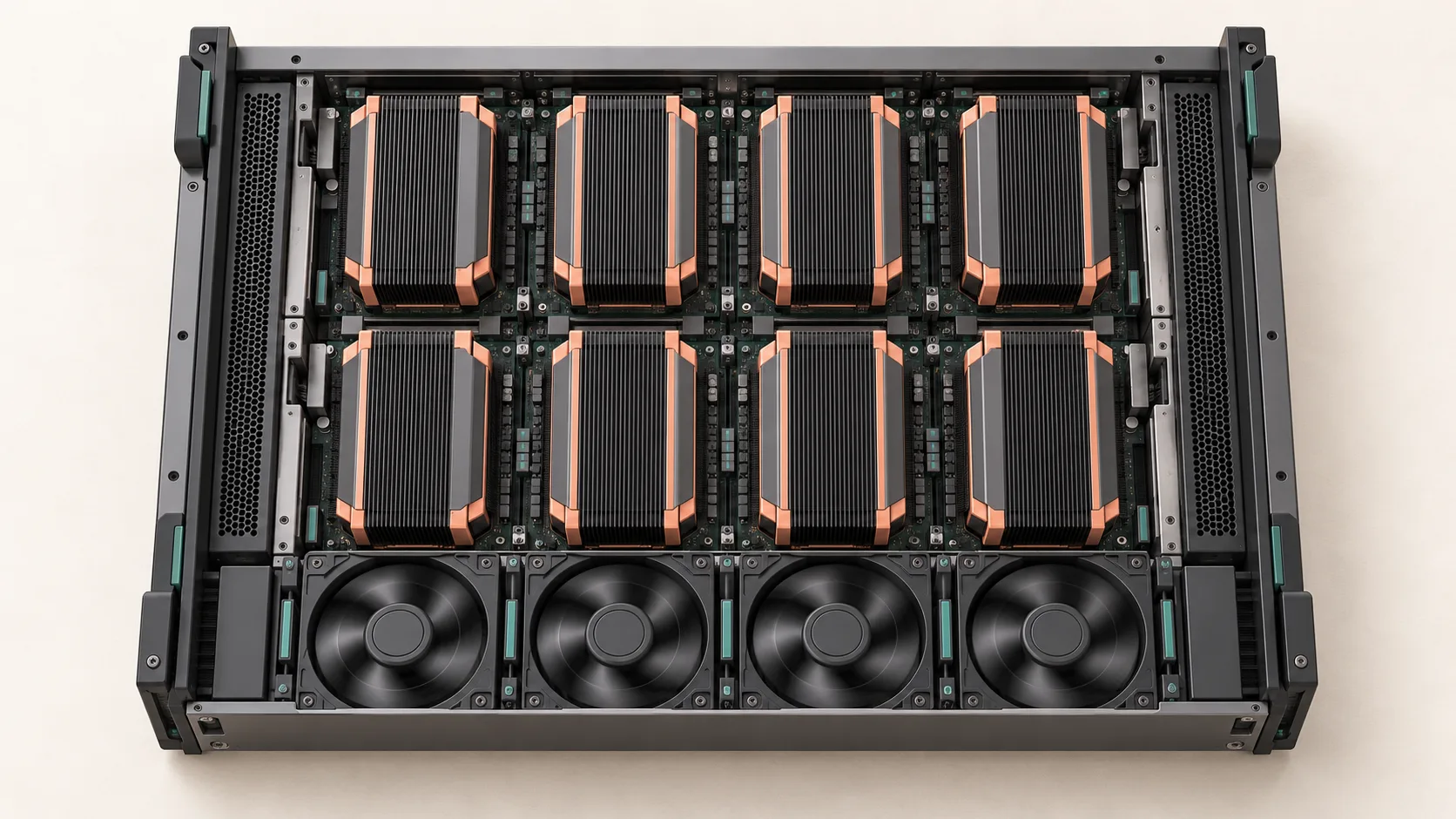
Other options include GPU inference blades with eight Instinct MI350P GPUs in a 5U server. General-purpose blades are intended for database and storage servers or technical compute workloads.
AMD SVP for Compute and Enterprise AI Dan McNamara said agentic AI spans enterprise applications and complex workflows with different compute needs. "To do that takes optimized compute and infrastructure that can adapt to different workloads. With AMD Helion, we are bringing Epyc performance, open software and flexible rack designs together so our partners can build systems around customer needs and make efficient use of available power," he said.
AMD named Cisco, Dell, HPE, Foxconn, Lenovo, Supermicro, and others as partners. It plans to contribute the Helion specifications to OCP for further development and adoption by the community. Partner-built configurations are scheduled for November 2026.