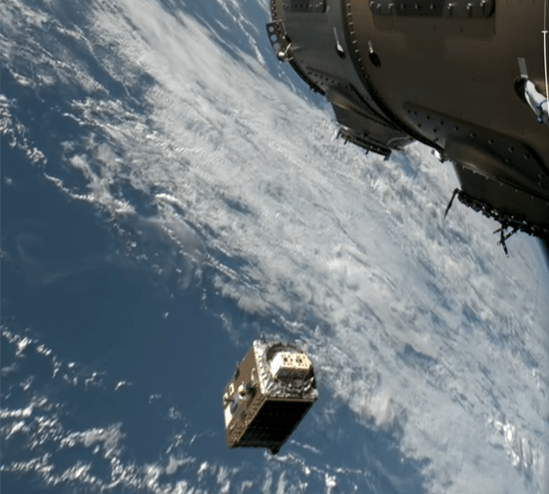

Starcloud, a startup building data centers in space, raised a $170 million Series A led by Benchmark and EQT Ventures. The round values the company at $1.1 billion, making it one of the fastest YC graduates to reach unicorn status: 17 months after demo day.
The company has now raised $200 million in total. In November 2025, Starcloud launched its first satellite carrying an Nvidia H100 GPU. Later this year it plans to launch Starcloud 2, equipped with multiple GPUs including an Nvidia Blackwell chip, an AWS server blade, and a bitcoin mining computer.
The longer-term vision is Starcloud 3, a 200-kilowatt, three-ton spacecraft designed to deploy from SpaceX Starship using the same PEZ-dispenser mechanism SpaceX uses for Starlink satellites. CEO Philip Johnston says this will be the first orbital data center cost-competitive with terrestrial ones, targeting around $0.05 per kilowatt-hour of power. That depends on Starship achieving commercial launch cadence, which Johnston expects around 2028 to 2029.
 Read nextUkrainian drone strikes disable Yandex data centers and AI supercomputers
Starcloud sells compute to other satellites
The business model has two parts. Near term, Starcloud sells compute to other satellites. Its first spacecraft already analyzes radar imagery from Capella Space on orbit. Long term, as launch costs fall, it aims to pull workloads from terrestrial hyperscalers.
The gap between ambition and reality is steep. The total number of advanced GPUs in orbit today is in the dozens. Nvidia sold roughly 4 million GPUs to terrestrial data centers in 2025 alone. SpaceX's Starlink constellation, the largest in orbit, produces around 200 megawatts of power. A comparable terrestrial data center produces gigawatts. But if launch economics shift, the calculus changes fast. Starcloud is positioning itself to be there when it does.