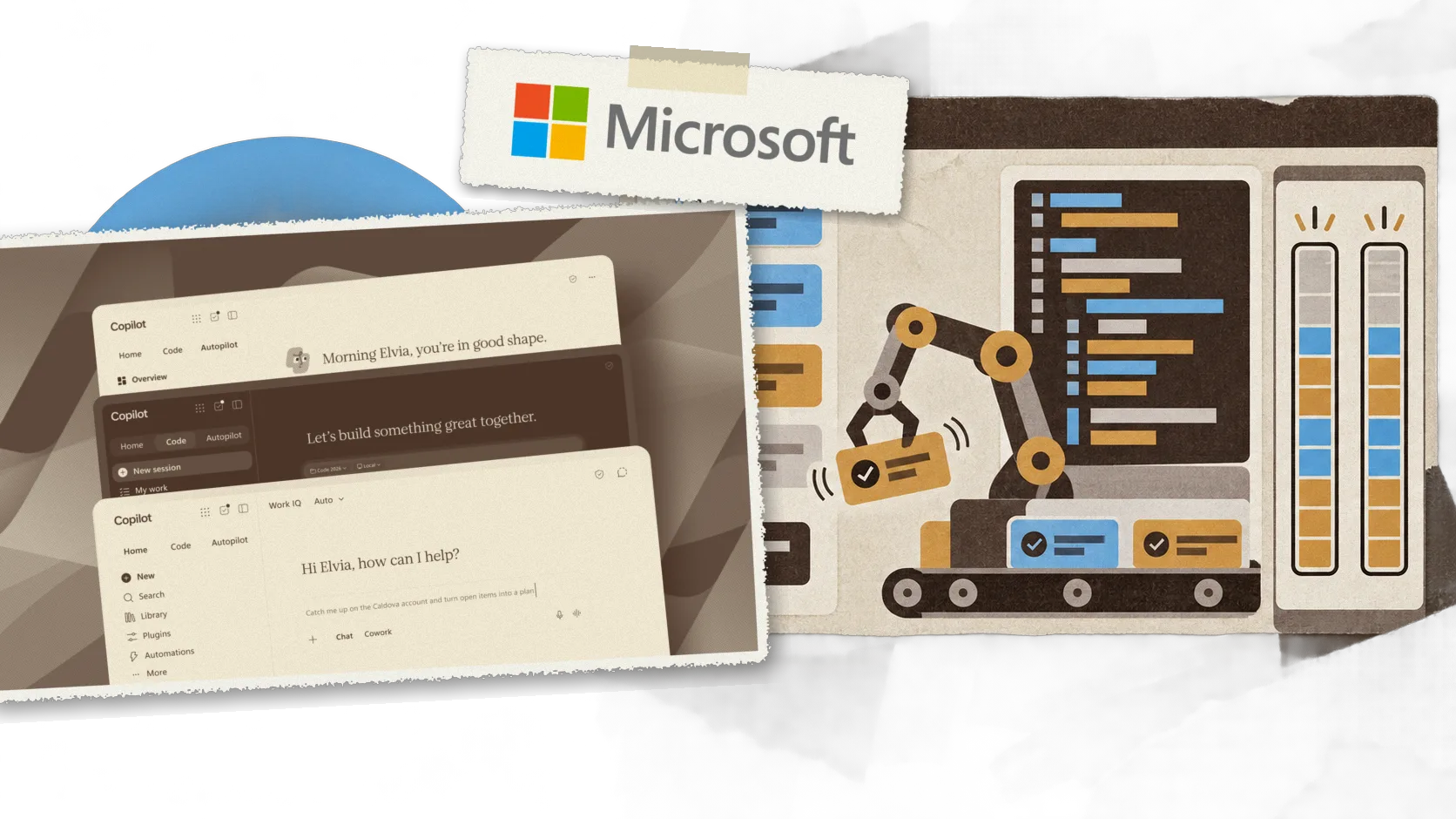

Microsoft has started rolling out a single, unified Copilot app designed to serve both consumer and enterprise groups across mobile and desktop environments. The updated application brings together tools that were previously fragmented across different client lineups and interfaces.
Despite serving personal Microsoft 365 subscribers, the new Copilot was engineered primarily for enterprise customers heavily invested in the Microsoft 365 ecosystem. Copilot Executive VP Jacob Andreou noted that roughly 90 million customers pay for Microsoft 365 out of their own pockets and want enterprise power in their personal lives.
The updated application features a design with three tabs named Home, Code, and Autopilot. Work accounts gain secure access via Work IQ APIs to massive data repositories stored in Outlook, SharePoint, OneDrive for Business, and Dynamics 365.
 Read nextMicrosoft Drops Copilot+ PC Branding on New Surface Devices
The Home tab combines chat functions with agentic workflows previously separated into Cowork. Chief Marketing Officer Jared Spataro highlighted an Office in Copilot feature allowing users to create editable documents, workbooks, and presentations directly inside the app.
A Today view feature enters private preview in October in Copilot before coming to Outlook and Teams. This proactive command center organizes mail, calendar, Teams threads, meetings, and tasks.
The Code feature uses technology from GitHub Copilot and runs inside a sandboxed environment hosted securely within the Microsoft 365 tenant. This differs from Anthropic Claude Code, which runs locally inside isolated containers or virtual machines.
Applications built through the Code feature run directly in Copilot using the Microsoft Copilot Managed Runtime platform. The Code feature rolls out to frontier customers shortly with broad availability in the coming weeks and later access for Microsoft 365 Premium and Pro subscribers.
The Autopilot feature, previously called Scout, introduces autonomous agents acting as digital teammates with individual memory and accounts. Microsoft announced it is evolving Copilot pricing by implementing two financial models.
Standard user subscription licenses cover chat features, Office integrations, and model selection for a fixed monthly price. Features involving agents, including Cowork, Code, and Autopilot, require usage-based billing.
Usage-based billing services start off by default in the off position with admin-defined spending policies and limits. Microsoft also detailed Agent 365 tools under the FinOps for AI umbrella to help administrators manage costs and track credit usage.
Microsoft plans to offer access to third-party tooling and allow professional developers to use the managed runtime platform.