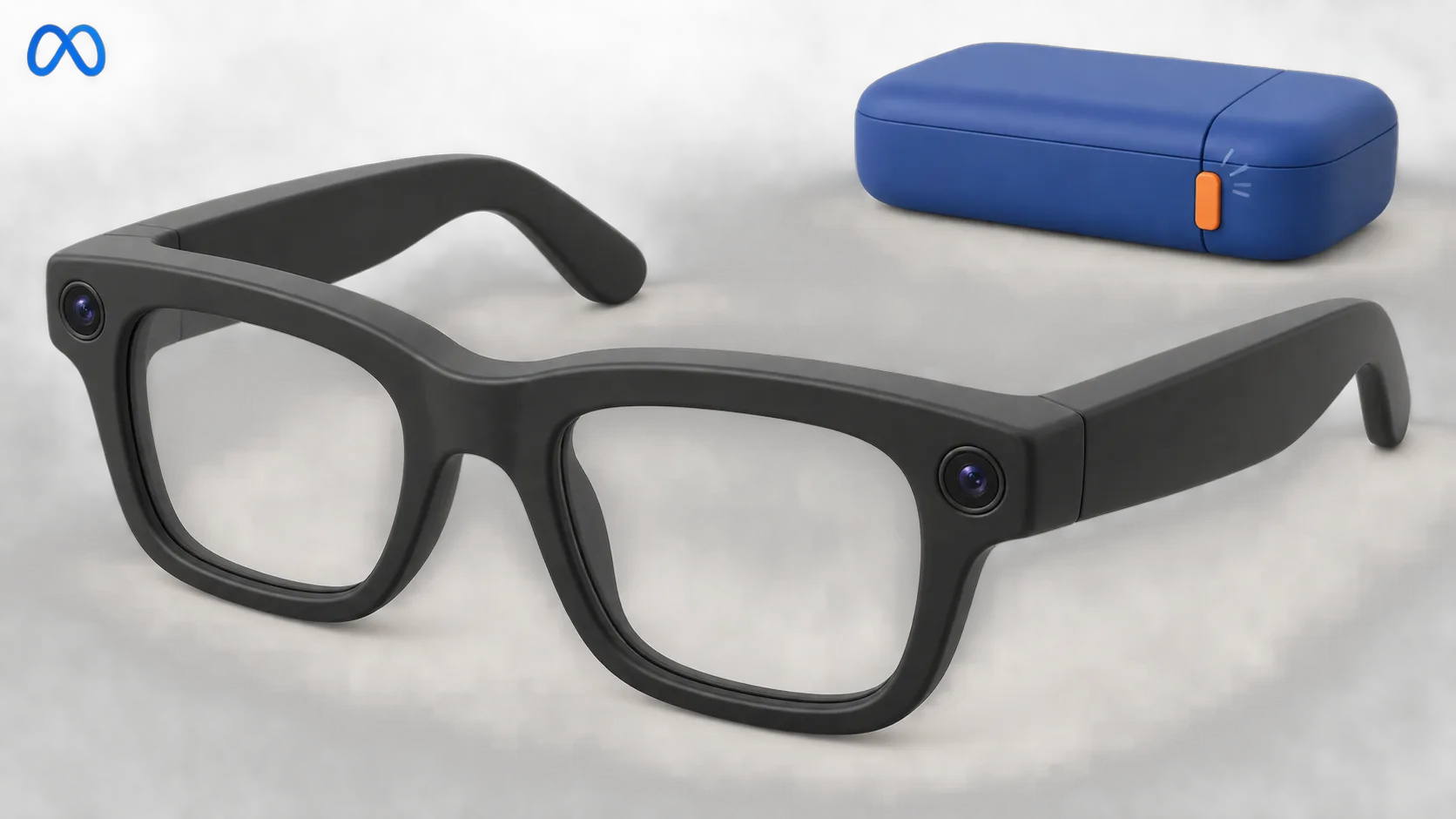

Meta has detailed how it is extending Private Processing to AI glasses. The design would handle sensitive AI work and stored personal context in protected cloud environments. It is not yet available on the glasses.
Calls and messages can run on the device. Streaming transcription, contextual search, and long-term recall need more computing power and access to context gathered over time, Meta says. The company introduced Private Processing for WhatsApp and Meta AI in 2025. Oskar Linde, Meta’s VP of XR Technologies, described the glasses approach on LinkedIn as a way to make AI useful throughout the day without giving Meta access to that personal context.
Cloud workloads run inside protected environments
Private Processing shifts the confidential computing boundary from the glasses to Meta’s cloud. AI models run in confidential virtual machines backed by hardware Trusted Execution Environments. Processor memory is encrypted, and Meta says the protection covers both CPUs and GPUs.
Before sending personal context, the glasses use remote attestation to check a hardware-signed certificate and compare the workload measurement with an append-only transparency ledger. They then establish an attested TLS session. If verification fails, they do not transmit the data. Anonymous credentials and third-party OHTTP relays operated by Fastly or Cloudflare further separate a user’s identity from request processing.
Meta also keeps the storage engine inside the protected environment. Data is encrypted with user-provided keys before leaving it, and queries run within the same boundary to limit exposure of database access patterns.
Meta describes hardware isolation, fail-closed behavior, public verifiability, non-targetability, and encrypted storage as principles of the system. Production virtual machine images are registered in the transparency ledger. Engineers cannot inspect protected memory or capture model inputs and outputs, so Meta uses aggregate signals such as CPU use, memory allocation, network latency, and hardware failure rates to monitor operations.
 Read nextMeta says Muse Wonder ranks near leading AI models
Deployment and privacy review are still ahead
Always-on wearable AI has prompted privacy concerns. In a Reddit discussion about Meta’s glasses, one commenter argued that an assistant offering contextual information would need to keep listening and observing its surroundings.
WIRED reported that Private Processing is not yet available on Meta’s glasses. Meta has not said which features will use it first or given an availability date. Engineering director Pritam Shah said the platform is ready and working, but Meta announced it before broader deployment to engage security and privacy researchers and a third-party auditor.
Meta says it is working with independent security firms, including NCC Group, and researchers to review the architecture and attestation mechanisms. It plans to provide researchers with virtual machine binaries, tools, and documentation as it expands the system for more stateful, multimodal, and agentic AI experiences.