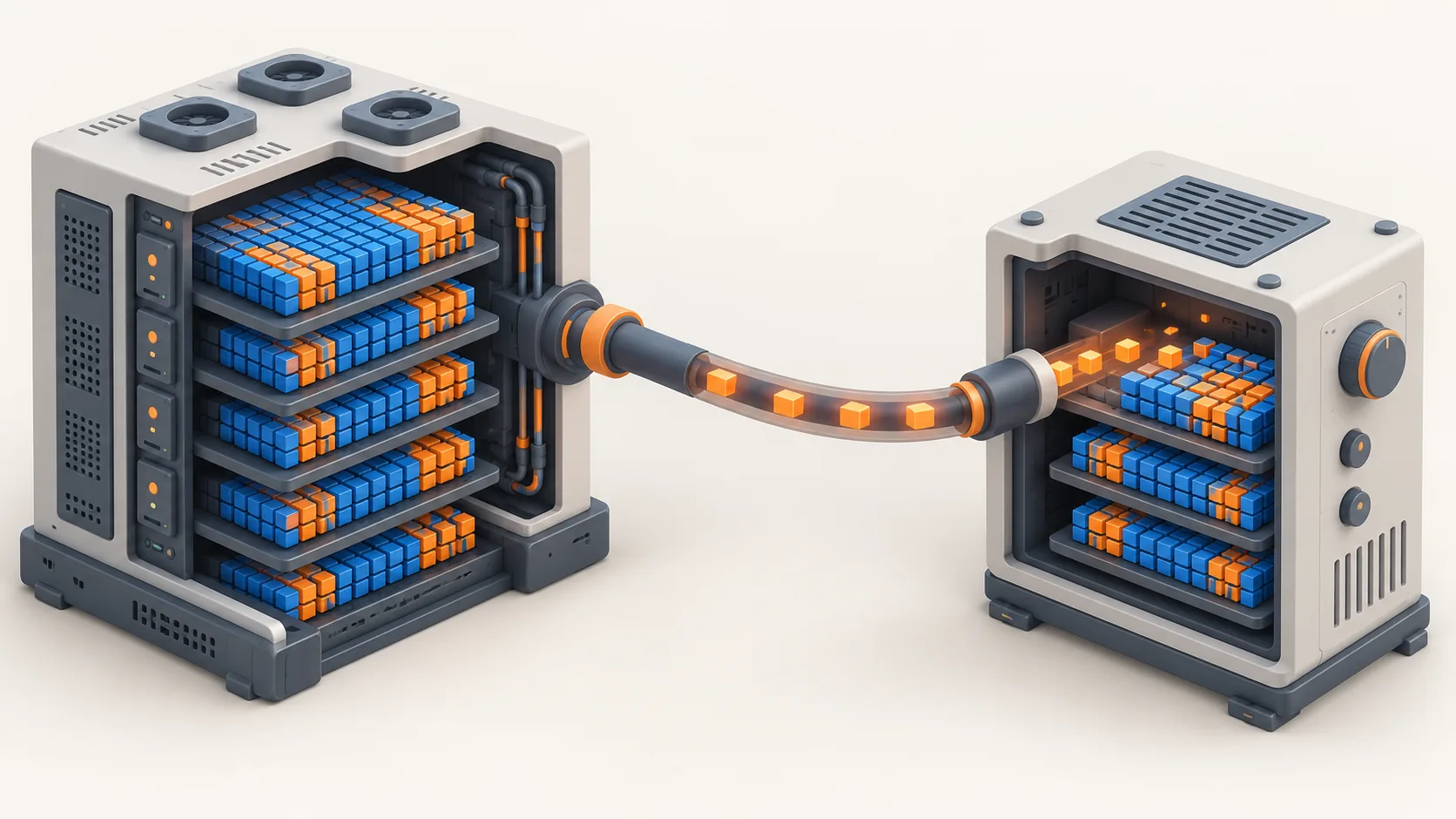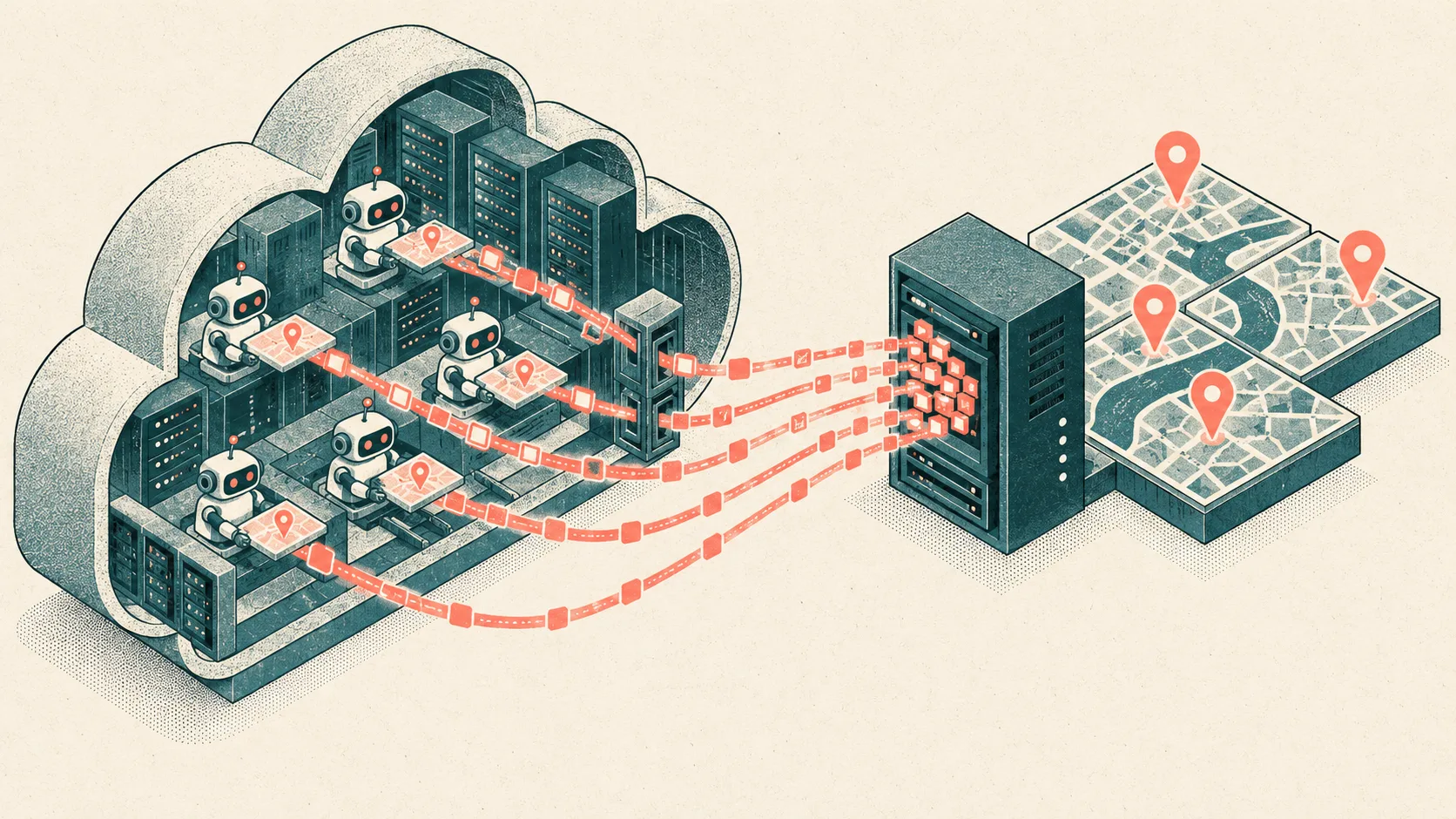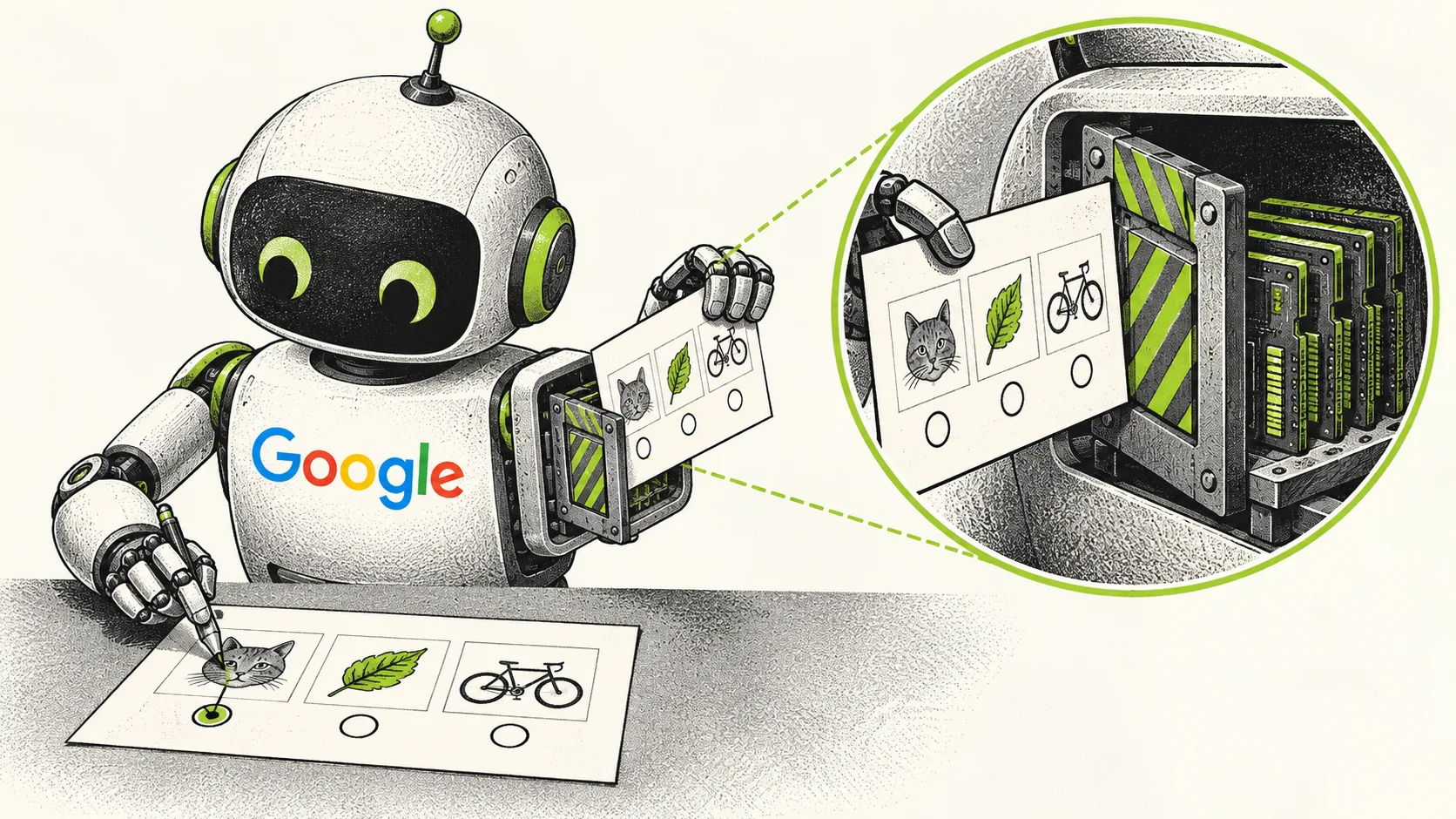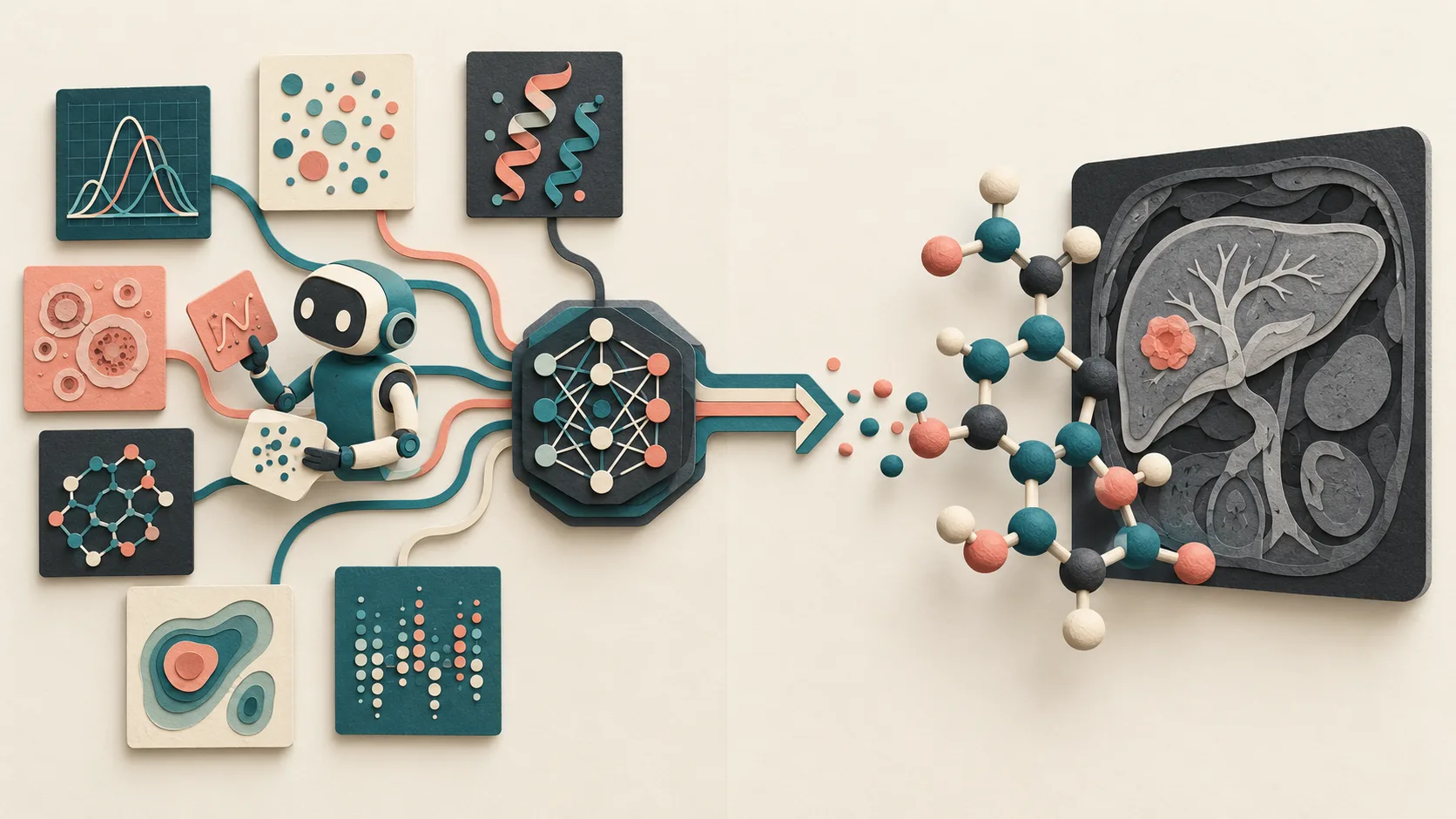

Researchers expanded the JEPA architecture pioneered by Yann LeCun so it works across seven very different fields. The effort also produced a liver cancer treatment candidate that the team tested in the lab.
World models predict how a system will evolve, whether it is a robot, a molecule, or a patient health status. Until now, each domain has typically needed its own model. A team led by PhAI Labs, with collaborators from Stanford, Oxford, and Princeton, wants to show that a single shared principle is enough.
JEPA-Anything splits predictions into modules
Their paper introduces JEPA-Anything, built on Joint-Embedding Predictive Architectures. These models do not reconstruct raw data like pixels. Instead, they predict an abstract summary of a missing or future state, filtering out irrelevant details. The authors see a weakness in the standard approach where everything gets funneled into a single prediction, causing easy patterns to drown out harder ones.
JEPA-Anything breaks the predicted state into several parts, each handled by its own prediction module. An added constraint pushes the modules to capture different aspects rather than learning the same thing. The model then reassembles their partial predictions into a complete picture.
The researchers do not assign meanings to the parts, letting those roles emerge during training. Instead, they only change how they prepare the data for each field.
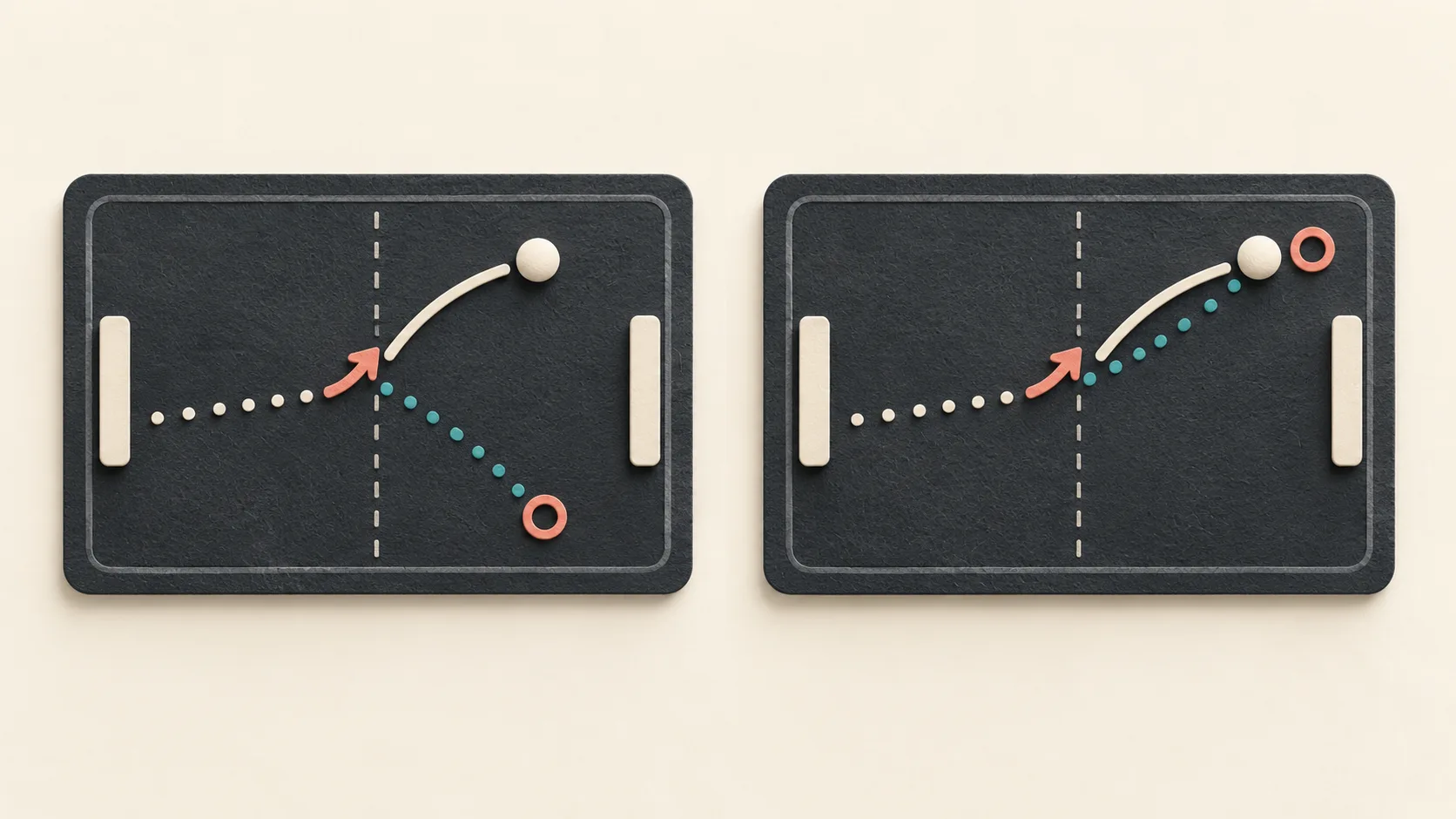
The model beats standard baselines on tests
The team compared JEPA-Anything against a standard JEPA with the same architecture, trained on the same data under identical conditions. Dynamic systems showed the clearest gains. In a simplified Pong environment with targeted interventions, prediction error dropped by 35 percent. For combinations of interventions the model never saw during training, it fell by 13 percent.
JEPA-Anything consistently beat the baseline across ten test tasks spanning physics, robotics, and weather forecasting, according to the authors. On the Burgers equation, a common fluid dynamics benchmark, error fell by nearly half in a separate evaluation. Over 50 prediction steps the advantage held but shrank to about three percent. The method also scored best in simulations of water, quartz, acetaminophen, and benzene, even after 100 steps.
For single-cell data, the model assigned cell types more reliably. On clinical data, it predicted more than 1,000 possible disease events slightly better. The difference on image tasks was small. In locomotion planning for simulated walking robots, JEPA-Anything won in two of three environments, while the standard model came out ahead in the third.
 Read nextReflection debuts Beam, an open-weight AI model to rival Chinese competitors
The model yields a cancer treatment candidate
The team boldest claim comes from liver cancer research. The researchers analyzed the partial predictions a model had learned from biological data including gene activity, protein levels, and CRISPR screens. The top candidate paired IL-18, a signaling molecule that activates immune cells, with blockade of the enzyme CD73, which tumors use to suppress nearby immune responses.
The team tested the combination on liver cancer cells co-cultured with immune cells, on organoids and tumor tissue from three patients each, and in mice. In the organoids and tissue samples, the combination killed more tumor cells than either IL-18 or CD73 blockade alone, and T cells and natural killer cells showed stronger activation. The study does not establish whether this could become an actual therapy.
In a second case, the researchers trained the model on simulated orbits without giving it any physical quantities. The learned patterns turned out to be a near-exact match for Kepler third law, which says bodies on larger orbits move much more slowly. The law sets orbital frequency at orbit size to the power of minus 1.5, and the model landed on minus 1.4991. The team only evaluated one training run, and picked the one with the lowest error.
Clean separation of the learned parts does not mean they capture real cause-and-effect relationships, the authors caution. It also remains an open question when such a model becomes reliable enough to guide experiment design. That is the team long-term goal, where AI agents would use JEPA-Anything to propose and rank experiments, then feed results back into the model. Code and models are publicly available.