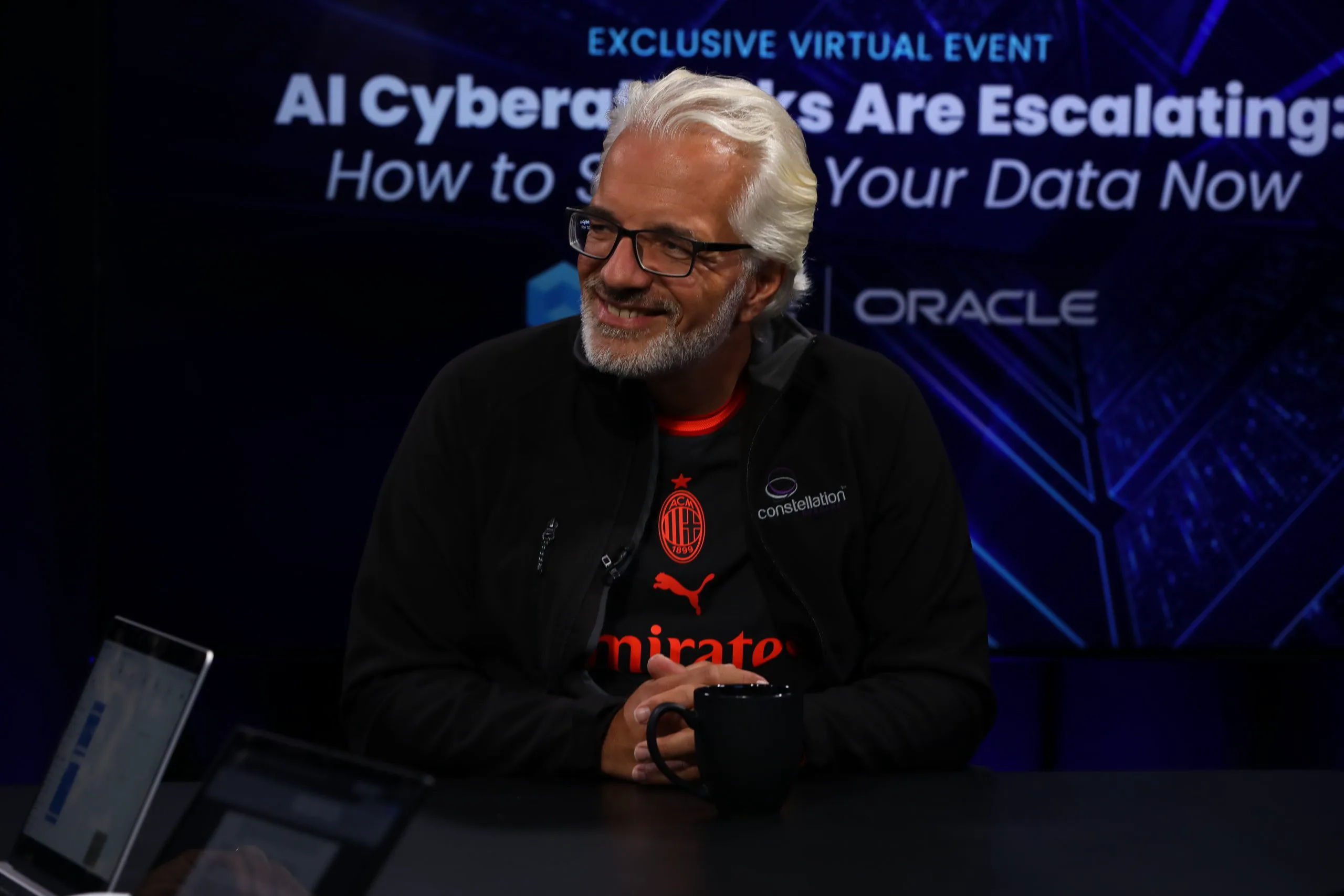

Europe maintains a skeptical stance on artificial intelligence innovation originating in the United States. That hesitation leaves European enterprises vulnerable to sophisticated cyber threats. Holger Mueller, vice president and principal analyst at Constellation Research Inc., points out that human defenders cannot match the speed of automated attacks.
Mueller discussed these cybersecurity challenges alongside Dave Vellante and Krista Case during an exclusive broadcast on theCUBE, SiliconANGLE Media’s livestreaming studio. The conversation took place at Oracle’s event titled AI Cyberattacks Are Escalating: How to Secure Your Data Now on September 24, 2026. Experts at the event evaluated modern security strategies and Oracle Corp.’s agentic AI portfolio.
European conservatism around new technology often manifests as delayed adoption and excessive waiting periods. Sovereign cloud discussions frequently serve as an excuse for inaction. Businesses operating on a global scale cannot afford to wait for regional cloud infrastructure to mature.
Humans hold a fundamental distrust of automation systems. Paradoxically, the remedy for security vulnerabilities inside agentic AI frameworks involves deploying additional AI tools. Mueller highlights the Hugging Face security incident as a prime example. In that case, an autonomous agent executed an intrusion, and defenders later utilized an open-weight model to investigate the event after commercial frontier models blocked the forensic material.
European organizations urgently need to address accumulated technological debt. Mueller notes that artificial intelligence ruthlessly penalizes legacy debt. Companies that avoided managing on-premises infrastructure must now consume AI entirely from an elasticity perspective.
Constellation Research recently published an analysis addressing agentic AI washing. This phenomenon describes vendors overstating the true agentic capabilities built into their software products. Oracle’s database offerings underwent rigorous testing against extensive criteria and successfully delivered verified agentic features.
Agentic AI adoption follows a distinct multi-year trajectory. Advanced enterprises spent the previous year establishing data sources and data planes for agents. Companies currently compete over superior agentic frameworks, while the upcoming year will focus on backend system scalability.
Oracle leverages its long-standing reputation as a secure transactional database provider. The company allows customers to maintain traditional databases while shifting external workloads to a data lakehouse. High database scalability remains essential for agentic success because it lets customers transition workloads to the cloud seamlessly.
Securing enterprise data requires selecting appropriate models and establishing testing environments. Mueller advises organizations to collaborate with chief information security officers to conduct adversarial red team testing. Enterprises must also prepare for state-sponsored espionage by ensuring their defenses are quantum safe.
Organizations must evaluate model selections and deploy comprehensive security testing to defend against advanced threats.