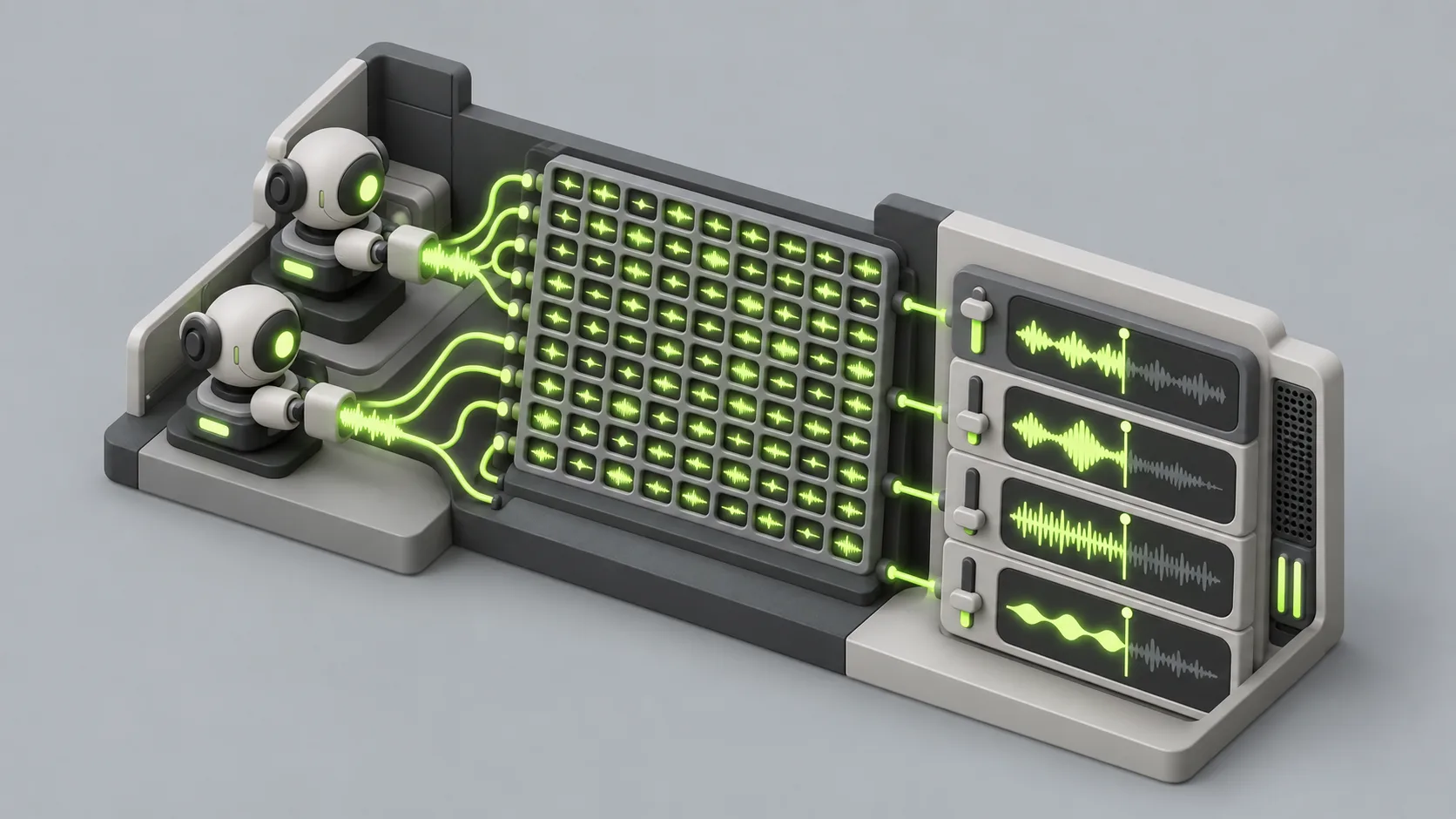

ElevenLabs launched two new speech models on Monday. The releases are named ElevenLabs v4 and v4 Turbo. They provide increased expression control and lower latency for voice agents. They also support more than 90 languages.
The company previously released its v3 model last year. It also teased the new generation at an event in Warsaw earlier this year. ElevenLabs is using a new architecture for the v4 generation. This new architecture allows for better control and faster cloning. The company stated that users can clone a voice using only 10 seconds of audio.
The model improves voice identity management over longer sections of text. It reads text aloud while maintaining context to alter expressions. ElevenLabs previously introduced inline tags to define expression with v3. It is expanding those tags in v4. Users can now stack multiple tags, and the model follows the sequence.
 Read nextVideo Game Data May Train Future Artificial Intelligence World Models
The release supports more than 90 languages
The previous version supported 70 languages. ElevenLabs increased that count to 90 languages for the new release. The startup observed the largest quality improvements in Japanese, Brazilian Portuguese, Mandarin, and Cantonese.
ElevenLabs grew its enterprise calling business quickly over the past year. Large companies now account for more than 55% of its business. The company noted that the new model suits voice agents because lower latency enables more fluid conversation. Furthermore, v4 can generate audio as soon as the underlying large language model generates answers. The model also handles confrontations, escalations, and holds differently to improve issue resolution.
Speech model competition has intensified as startups build expressive alternatives. Competitors include Cartesia, Deepgram, Fish Audio, Boson, and WellSaid Labs. Major technology companies like Google and OpenAI also enhanced their own voice models.

ElevenLabs raised 500 million dollars
ElevenLabs raised $500 million earlier this year in a round led by Sequoia. That funding valued the company at $11 billion. Rumors suggest a follow-up fundraising round could value the company at $22 billion. The company annualized revenue run rate increased from about $330 million at the start of the year to over $600 million. ElevenLabs hired staff across India, Europe, and Brazil, bringing its total headcount past 800.
Co-founder and CEO Mati Staniszewski mentioned in an interview that the company aims for an initial public offering in the coming years. He did not commit to a specific timeline.