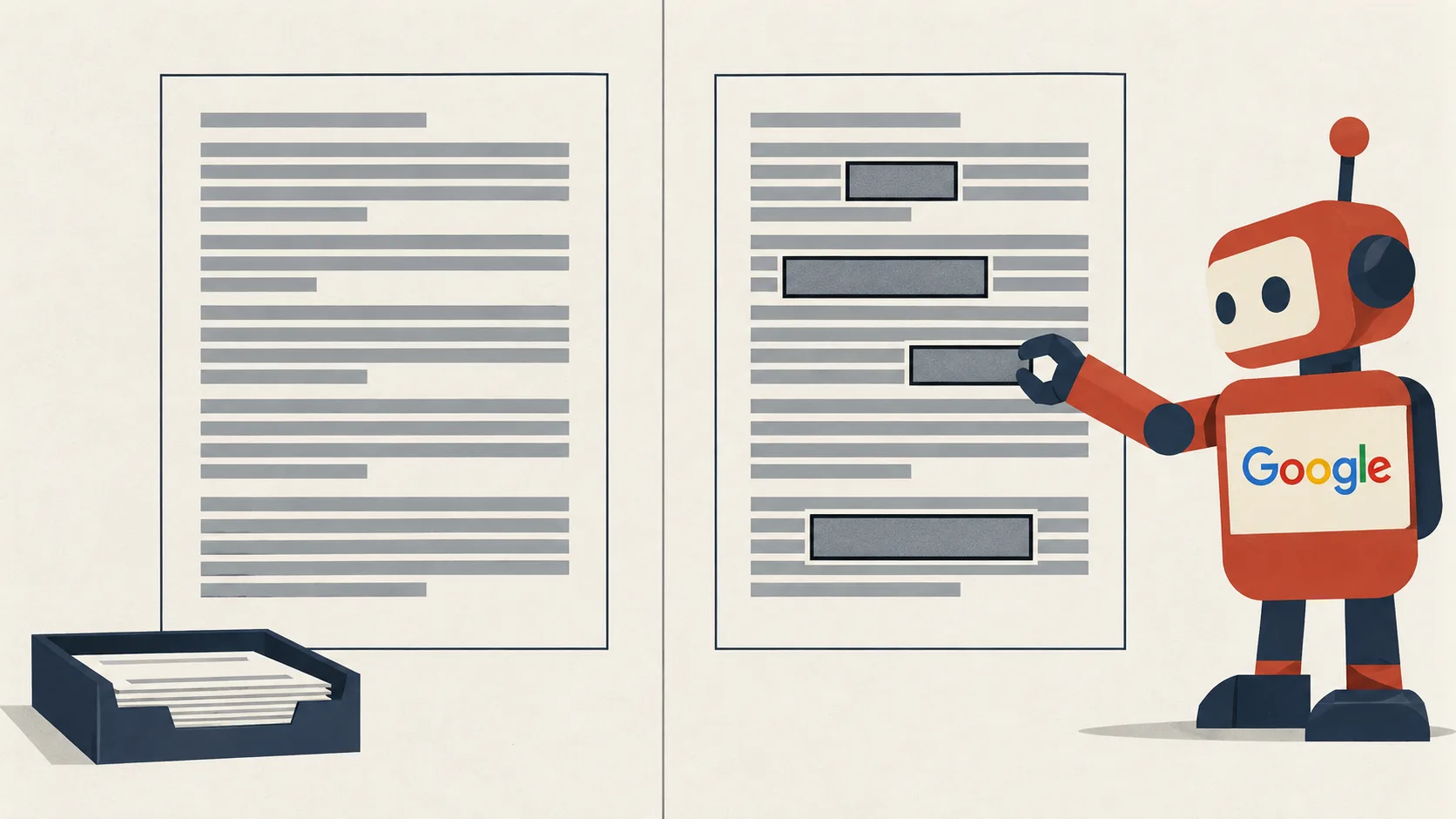

The Department of Homeland Security will use Google artificial intelligence tools to suggest information for Freedom of Information Act redactions. GitHub documents seen by The Washington Post revealed this upcoming federal agency adoption.
Document redactions gained widespread attention recently because the US Justice Department used them to black out text in millions of documents during the Epstein file release. Now, the government plans to use artificial intelligence to manage that redaction workload for Freedom of Information Act requests.
Customs and Border Protection adopts Google tools
US Customs and Border Protection, which operates under the Department of Homeland Security, will rely on Google artificial intelligence tools. These systems will recommend specific text that Freedom of Information Act officers should redact from records.
By the end of September, the Department of Homeland Security will apply artificial intelligence to documents representing over 10 percent of its Freedom of Information Act requests. This volume equals approximately 100,000 to 140,000 total requests.

Federal agencies deploy various platforms
Human employees at the Department of Homeland Security will review the suggestions from the artificial intelligence systems. Project descriptions state this review ensures requesters receive accurate and complete information, while the automation is expected to significantly reduce processing times.
The Post found other federal agencies using or developing similar redaction technology. The Interior Department uses Microsoft tools to hide potential attorney-client information, while the Justice Department uses a Veriton platform called aiWARE to redact video content.
 Read nextVideo Game Data May Train Future Artificial Intelligence World Models
Health agencies build custom redaction tools
The Health and Human Services division is developing a proprietary tool named FRED to redact unknown information from records. An Food and Drug Administration spokesperson told the Post that the agency is responsibly exploring limited uses of artificial intelligence to help staff process records more efficiently.
Critics warn that these automated systems might increase the volume of missing or obscured text. A Freedom of Information Act expert at the University of Florida told The Washington Post that the public must monitor how the government uses artificial intelligence for redactions because it serves as a powerful tool for secrecy.