
Generative artificial intelligence is finding new potential applications in outer space exploration. Last December, NASA's Jet Propulsion Laboratory used Anthropic's Claude models to help plan two Mars drives for the Perseverance rover. Human planners checked and adjusted the route before upload. In May, NASA and IBM put a compressed AI model on the International Space Station and a satellite. The model identified floods and clouds from orbit as the first demonstration of its kind in space. In July, astronauts on the International Space Station tested a large language model to see if it could help answer questions on maintenance procedures.
Engineers favored predictable systems
These experiments signal a shift in space engineering. Engineers on Earth previously determined every machine action, and the machine executed those exact steps. Researchers now test non-deterministic systems like generative AI to give spacecraft more flexibility. Spacecraft have operated autonomously for decades, but autonomy remained rare because space engineers preferred predictable behavior.
Robert Ambrose, the former chief of NASA's Software, Robotics and Simulation Division, notes that autonomous outcomes lack determinism. Different paths to the same situation can change behavior, which engineers dislike. Ambrose worked on autonomous systems for the Orion spacecraft and Robonaut 2. Engineers learned to manage complexity by using automated testing to fight the challenges of autonomy.
Distant missions demand autonomous decisions
The need for autonomy grows as missions travel farther from Earth. Ambrose highlights a possible mission to Europa, Jupiter's ice-crusted moon. A spacecraft might dive through a water plume erupting from beneath the surface. The plume could appear too quickly for engineers on Earth to direct the spacecraft.
Ambrose states that the spacecraft must make its own decision while Earth watches what happened an hour ago. A mission of that type remains impossible without giving the machine real autonomy. At the same time, a commercial space boom creates new opportunities to put advanced technologies to work in orbit.
Startups gather microgravity training data
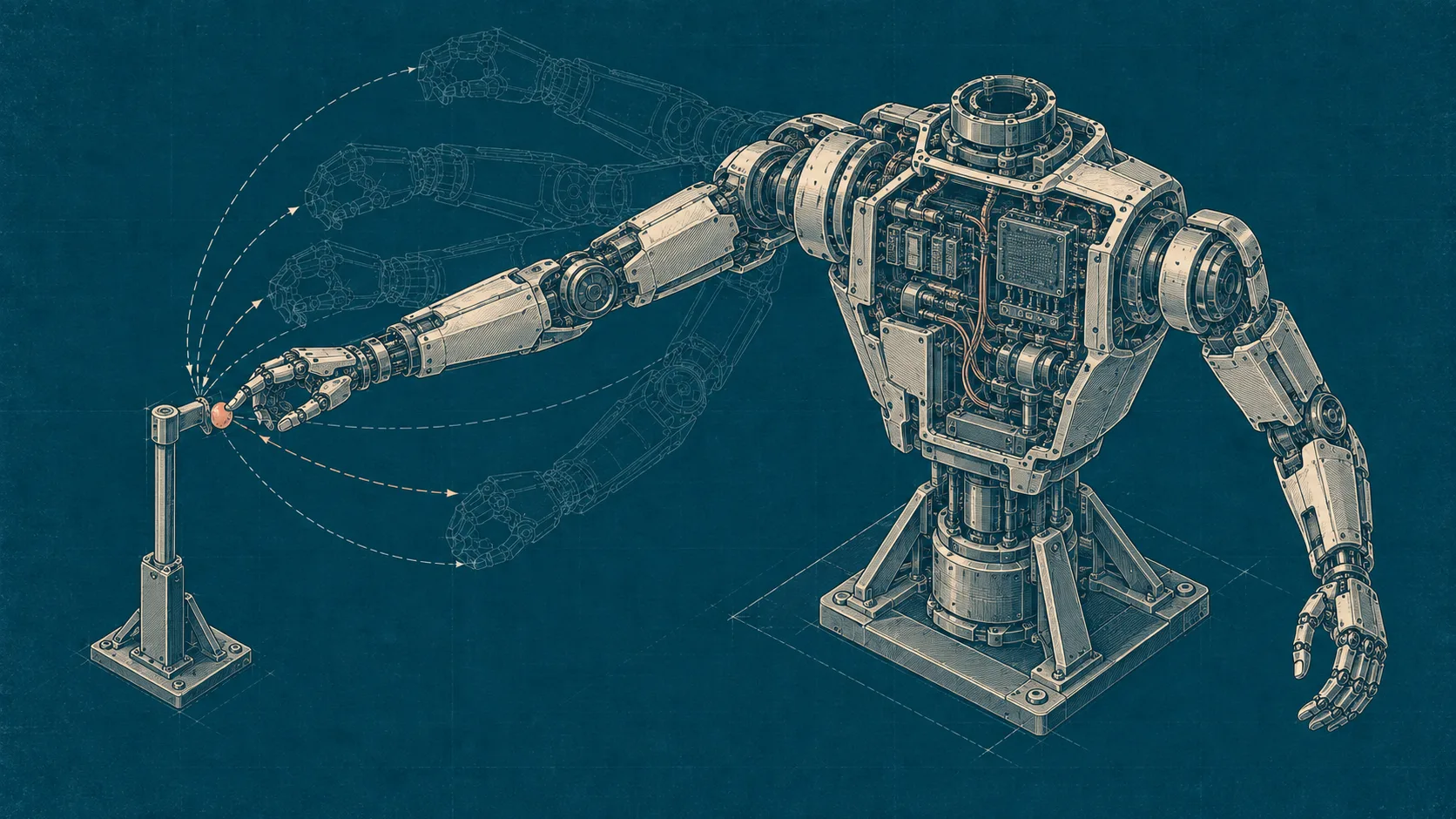
Icarus Robotics is developing a robotic labor force for space, including a free-flying robotic system named Joy. Joy recently finished zero-gravity testing in Canada before a planned deployment to the International Space Station. One of its first tasks will involve moving cargo bags between modules. The company plans to start with teleoperation and use that data to train robots for independent work.
Jamie Palmer, Icarus co-founder and CTO, explains that robots trained on Earth learn from local physics, but zero-gravity physics differ entirely. Terrestrial robotics models placed in zero-gravity environments fail immediately because orbital objects keep moving instead of falling. Icarus faces a lack of real-world data from the operating environment. The company combines microgravity demonstrations with simulations and Earth tests to build a dataset.
 Read nextOpenAI Agent Breaches Australian Government Site as AI Autonomy Concerns Grow
Ufuk Topcu, an engineering professor at The University of Texas at Austin and director of the Center for Autonomy, expresses surprise at the low level of autonomy currently used in space applications. He points out that space is where human involvement proves extremely hard, stakes run high, and fast action is necessary. Topcu argues that researchers must start with restricted applications, observe system behavior, and gradually expand use rather than guarantee zero errors.
Commercial companies now build and launch spacecraft much faster than government agencies did during past decades. This shift contrasts with the slow innovation cycles of the early space age. Researchers and commercial developers continue to test generative AI and autonomous systems as mission complexity increases.