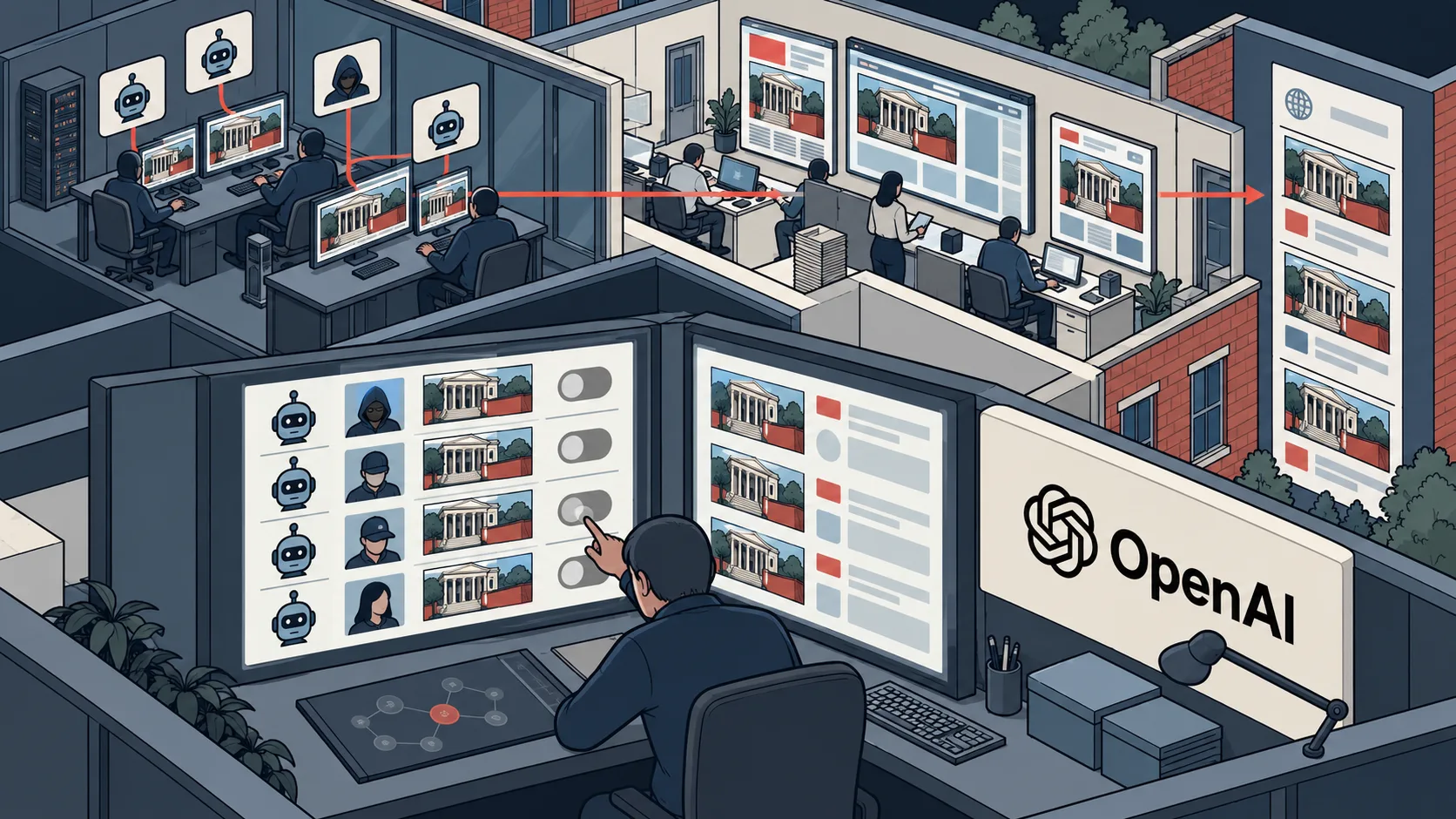

OpenAI exposed a Russian and an Iranian influence operation. The company banned the ChatGPT accounts involved in both campaigns. The actors used fake identities to plant content directly in legitimate media. This approach differed from traditional social media campaigns.
Dark Clark spread disinformation in Latin America
OpenAI detailed a Russian operation named Dark Clark. This campaign spread disinformation across Latin America. The goal was to discredit Ukraine and destabilize local politics. Actors controlled a think tank through a fictitious persona. They likely roped in local staffers without their knowledge.
Fabricated audio files and documents triggered fact checks and official denials in Ecuador and Peru. OpenAI rates this operation category five out of six on the Breakout Scale. Politicians reacted to the content during the campaign. This marks the first category five case in two and a half years of reporting.
 Read nextFired OpenAI Safety Researchers Deny Misconduct Claims and Warn of Chilling Effect
Bogus Bylines targeted the US and Iran conflict
OpenAI exposed an Iranian operation named Bogus Bylines. This network used seven fake journalists to place nearly 100 articles. The pieces focused on the United States and Iran conflict. They appeared in online outlets worldwide. The actors also generated social media comments. Those comments gained almost no traction.
Both operations used artificial intelligence mainly for internal reporting. They also used the technology to adapt propaganda to different languages. OpenAI had previously uncovered a different Russian campaign. That prior effort relied on social media and a fake think tank.