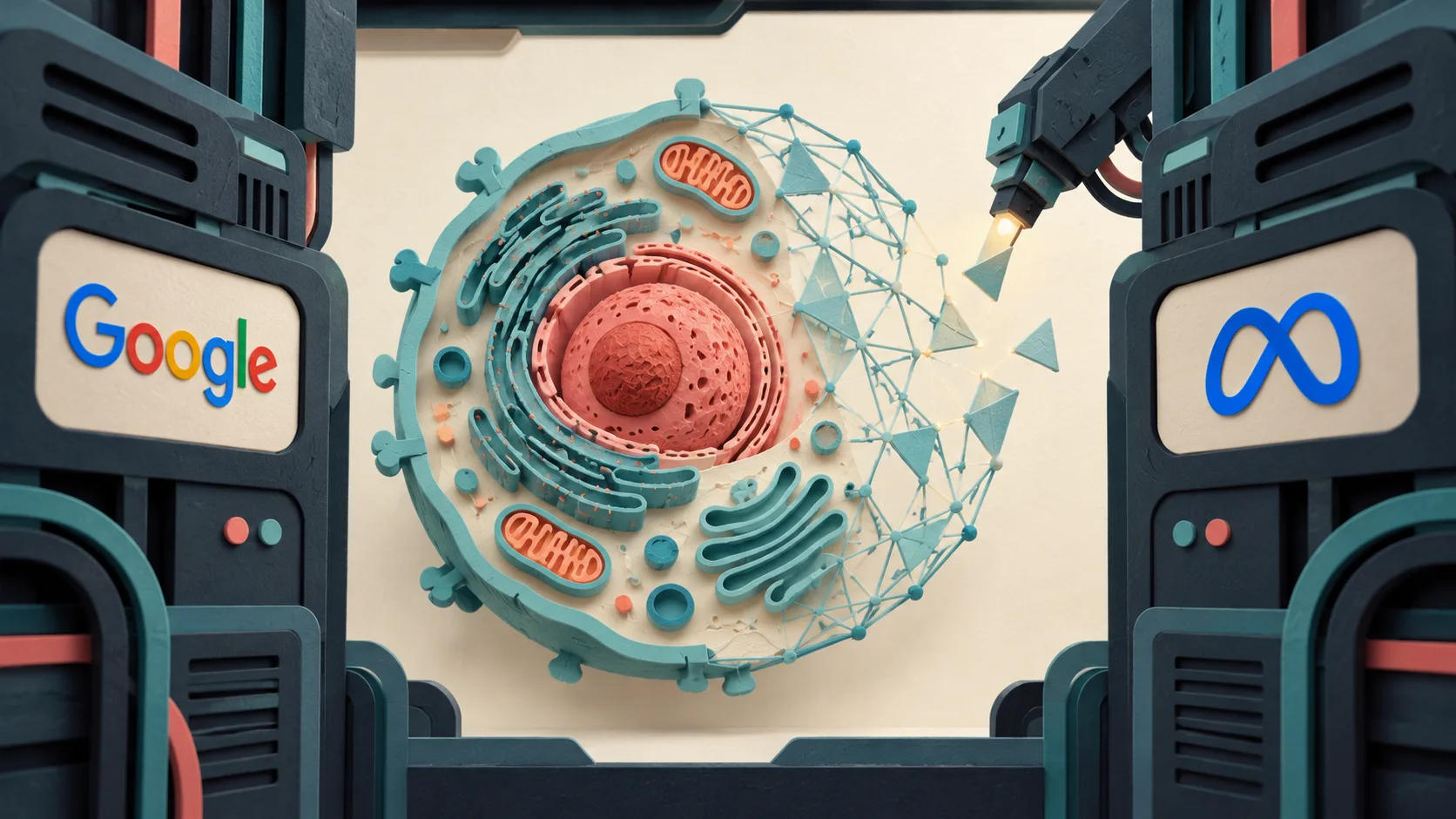

Google DeepMind, Meta, and AI drug discovery startup Isomorphic Labs are jointly investing $300 million into Biohub. Reuters reported the funding agreement. Biohub is a nonprofit biomedical research organization. Mark Zuckerberg and his wife, Priscilla Chan, founded the organization.
Tech giants fund the virtual cell project
The funding is part of a larger $1.8 billion initiative. The project aims to build AI datasets. Researchers could use these datasets to ask, predict, and answer biological questions digitally. The work aims to help find new ways to prevent and manage diseases.
Biohub was founded in 2016. The organization aims to combat diseases through the creation of a virtual cell. Researchers can use this digital cell to carry out simulations.
Federal agencies contribute funds and data
The US Department of Energy will invest more than $500 million over the next five years to support this effort. The National Institutes of Health will contribute datasets, repositories, and knowledge bases. These resources stem from previous federal investment totaling over $500 million.
Alex Rives serves as Biohub's head of science. He shared a statement in the press release regarding the project. An accurate predictive model of biology could dramatically accelerate scientific discovery. It enables scientists to perform experiments digitally.
The creation of a virtual cell is one of the most important challenges for the next era of science. Rives stated that this requires coordinated data generation efforts at a national and international scale. This necessity explains why the partners are coming together.