
Saudi Arabia recently celebrated the launch of Humain-m3, which it calls the world's most advanced Arabic-language AI model. The technology behind this release came from China. At the same time, the kingdom is spending billions of dollars to build its artificial intelligence infrastructure with American companies.
Humain-m3 relies on an open-source system created by MiniMax, a Chinese startup. The state-backed Saudi company commissioning the project has also signed major deals with Nvidia and other United States technology firms.
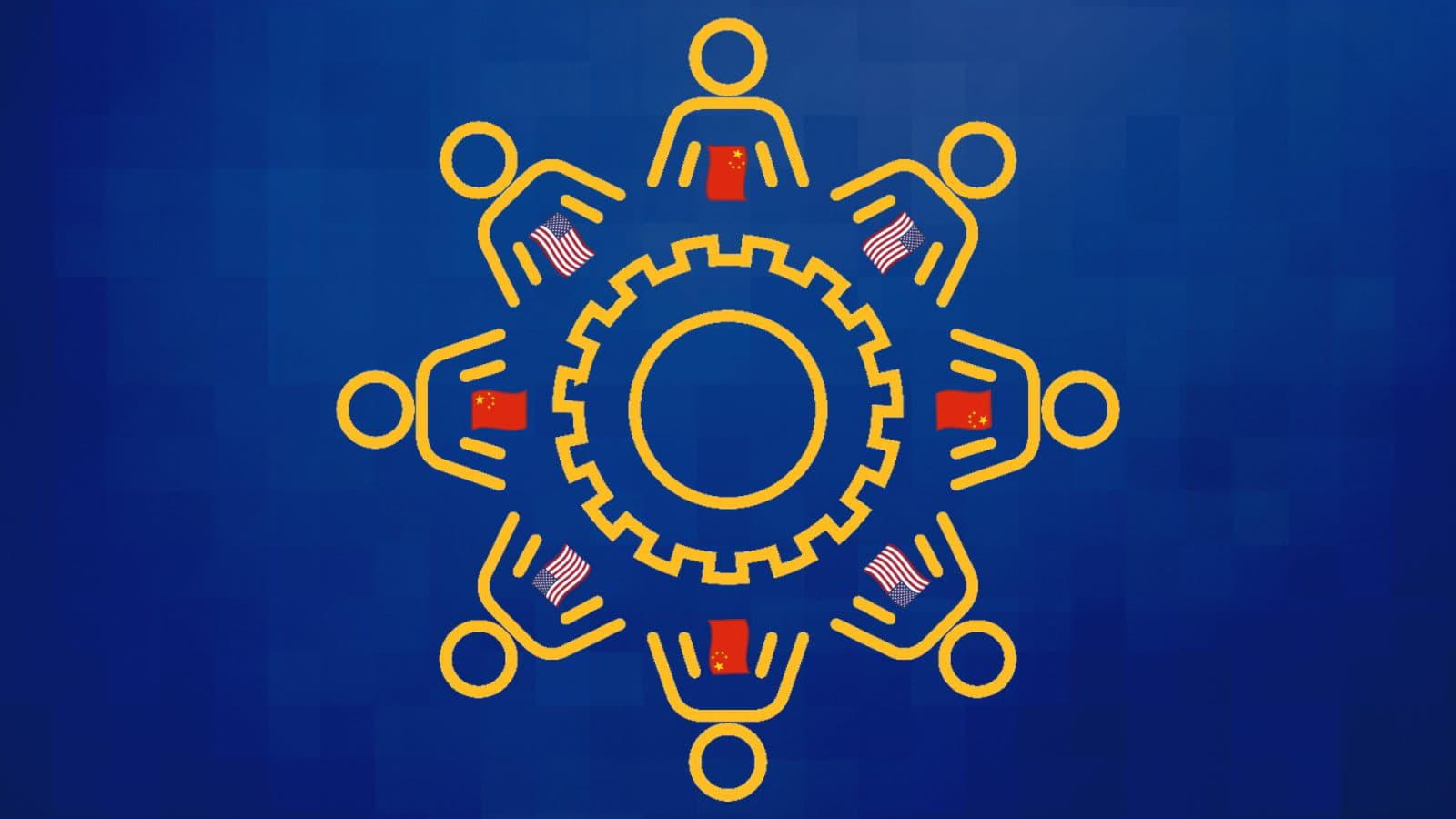
Nations around the world are buying American chips while utilizing Chinese open-source models. This trend splits key artificial intelligence projects between companies from both superpowers and complicates Washington's competition with Beijing.
Kyle Chan from the Brookings Institution explained that many countries in the Global South want the best of both worlds. These nations often do not attach the same security stigma to Chinese technology that Washington does, preferring to keep their options open.
Brazil announced an investment worth roughly $444 million into artificial intelligence, dividing the funds between Chinese and American technologies. About $255 million goes to supercomputing infrastructure in Rio de Janeiro developed with Huawei and iFlytek. The remaining $189 million is expected to source a separate supercomputer from Nvidia.
President Luiz Inacio Lula da Silva's administration stated that the strategy avoids dependence on a single company, technology, or country. The investments aim to strengthen Brazil's sovereignty over its data.
Jesse Marks from the Australian National University noted that technological sovereignty does not mean building an entire artificial intelligence stack at home. Frontier competition is too expensive, forcing governments to choose where they rely on foreign suppliers.
The United States maintains greater leverage in semiconductors, networking equipment, and cloud infrastructure. However, Washington struggles with nations that want artificial intelligence but cannot afford American systems.
Malaysia is evaluating Huawei Ascend 910C accelerators for its sovereign artificial intelligence initiative. In Egypt, Huawei bid to build government data centers against a proposal involving Nvidia.
Kazakhstan and Uzbekistan have both joined the United States-led Pax Silica initiative and China's World Artificial Intelligence Cooperation Organization. Arindrajit Basu from Leiden University stated that China wants countries to choose sides but realizes an ultimatum is unrealistic right now.
Singapore, a founding signatory of Pax Silica, publicly acknowledged receiving an invitation to join the China-led organization and is considering the offer. Singapore's Minister for Digital Development and Information, Josephine Teo, stated that the country engages different nations through various bilateral platforms.