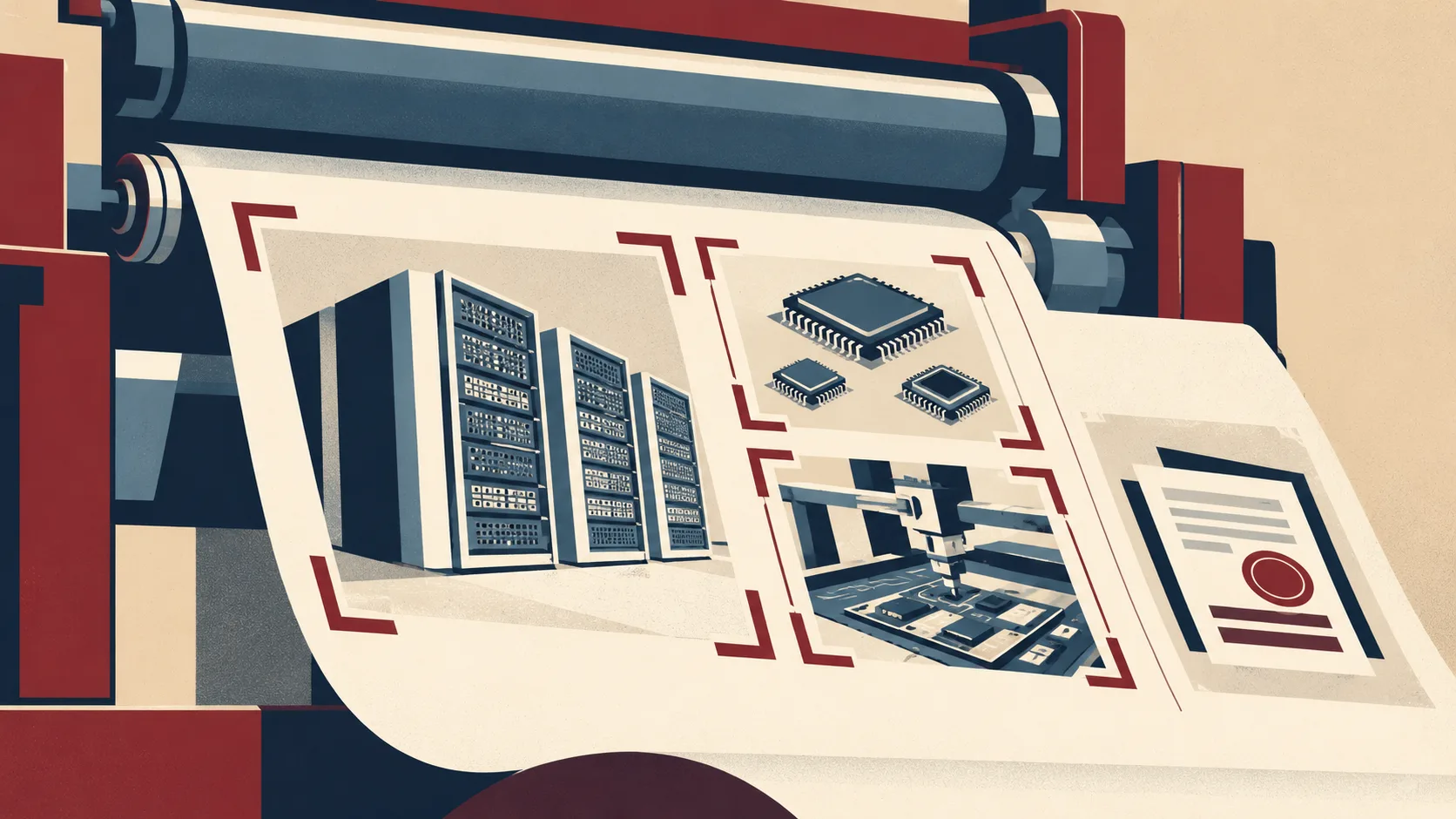

China's commerce and science ministries have proposed an update to the country's list of banned and restricted export technologies. The draft covers 23 key AI technologies, including large models, agents, compute clusters and data processing.
It would ban exports of AI tools that can independently create or modify malware to attack critical infrastructure, the military or government agencies. Certain tools used to find software vulnerabilities would face export limits instead of a ban.
Large models face two sets of controls
One set applies to models trained on China's “important data,” as defined by its Data Security Law and related rules, that provide services based on that data. Lawfully public data is exempt. A model may also contain up to 0.1 percent of such data if it was cleaned beforehand, never appears in outputs and does not substantially increase the model's research and development capacity for core technology in that field.
The other set covers the technology behind large models, including weights, checkpoints, source code, architecture, and training or inference methods. Controls apply if a model used at least 10^26 FLOPs of training compute, has at least 2 trillion parameters, or ranks among the global top 10. Export officials would assess that ranking using public lists from major Chinese and foreign evaluators or industry platforms. They can consider overall performance, specific tasks, safety and global usage.
 Read nextAlibaba AI models reportedly approved for Apple Intelligence in China
Dean W. Ball, head of strategic futures at OpenAI, writes: “This move does not mean 'China is shutting down open-weight models,' but it does indicate the Chinese government establishing the optionality to shut down future open-weight models at will.” He calls the framework a “mirror image” of existing US controls on model-weight exports.
The draft could affect companies that depend on Chinese open-weight models. US companies may turn further toward domestic alternatives. It also raises a question for Europe's strategy of running open-weight models in domestic clouds, alongside efforts to host closed top-tier models on local servers: future access could depend on export rules in the US or China.
Eligible releases receive automatic licensing
AI technology already public through open-source releases or research papers is exempt. For restricted technology and weights that companies plan to publish as open source, the draft offers “automatic licensing.” Eligible exports are cleared when a company files the paperwork. The same process covers Chinese firms operating their own data centers abroad, having chips made overseas, researching with foreign partners or helping set international standards.
Access to restricted models through APIs, apps, websites, SaaS products or lightweight versions on local devices remains outside these export controls. Installing restricted AI technology on local servers abroad requires a standard export license. A company running the software on its own overseas cloud can use the streamlined process.
Beijing also says it will support AI development in the Global South and ease exports for capacity building, technology sharing and joint rulemaking through the World Artificial Intelligence Cooperation Organization, a bloc China launched to counter Western AI bodies. Until the final rules take effect, companies must register affected exports through the commerce ministry's portal.