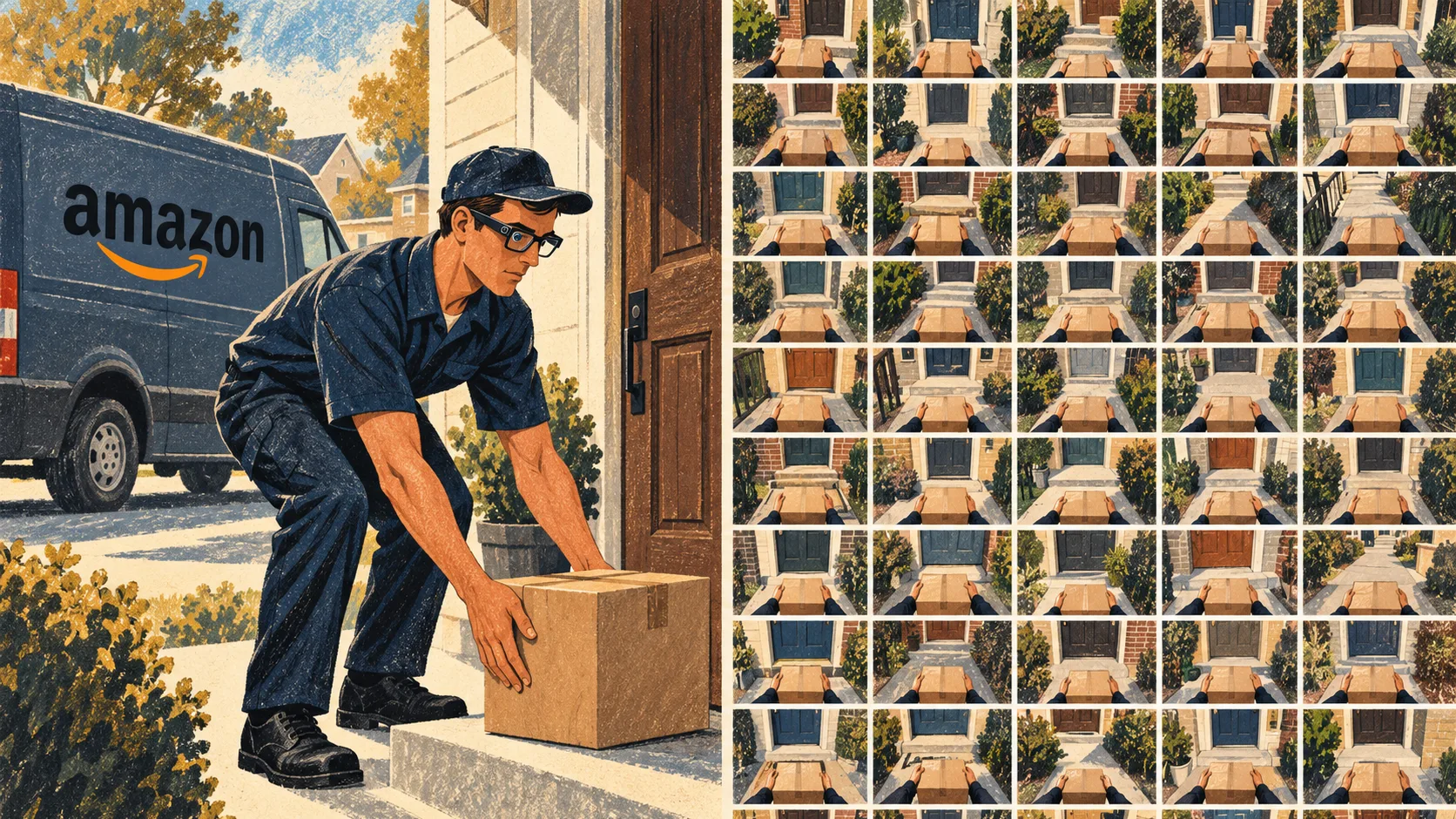

Amazon is developing smart glasses for delivery drivers that will capture photos almost constantly while in use. Bloomberg reports that these devices could take several thousand captures in a single driver typical shift. Amazon plans to upload this collected imagery directly to its AI Wellspring platform.
Smart glasses will capture thousands of images
Drivers participating in a pilot program have already completed over 275,000 deliveries while wearing the device. The resulting photos will match the quality of quick pictures drivers currently snap when delivering packages. Amazon intends to deploy 20,000 more pairs of these smart glasses in the field by the end of 2027.
When asked if customers can opt out of the photo capture, Amazon representative Viraj Chatterjee stated that the company has not thought about that. Chatterjee stated that Amazon only uses the data to enhance the delivery process and that the intent has never been surveillance. Amazon confirmed that images from the smart glasses could be obtained with a warrant, but declined to specify how long the company plans to store them.
Systems will blur faces and license plates
Amazon stated that its systems will blur any people and license plates in the images before passing them along for human review. However, customers will reportedly lack any method to view images that Amazon holds of them or their property. Customers also will not be able to ask Amazon to delete those specific photos.

Delivery drivers already face surveillance technology inside their vehicles through existing AI cameras. Drivers previously complained that these vehicle cameras failed to register secured seat belts, forced them to pull over to drink coffee, or suffered from leaked footage online.
Amazon plans a major deployment by 2027
The company moves forward with plans to scale up its hardware deployment despite ongoing privacy concerns regarding driver and customer monitoring. Amazon will continue expanding the pilot program toward its target of 20,000 active pairs of smart glasses by the end of 2027.