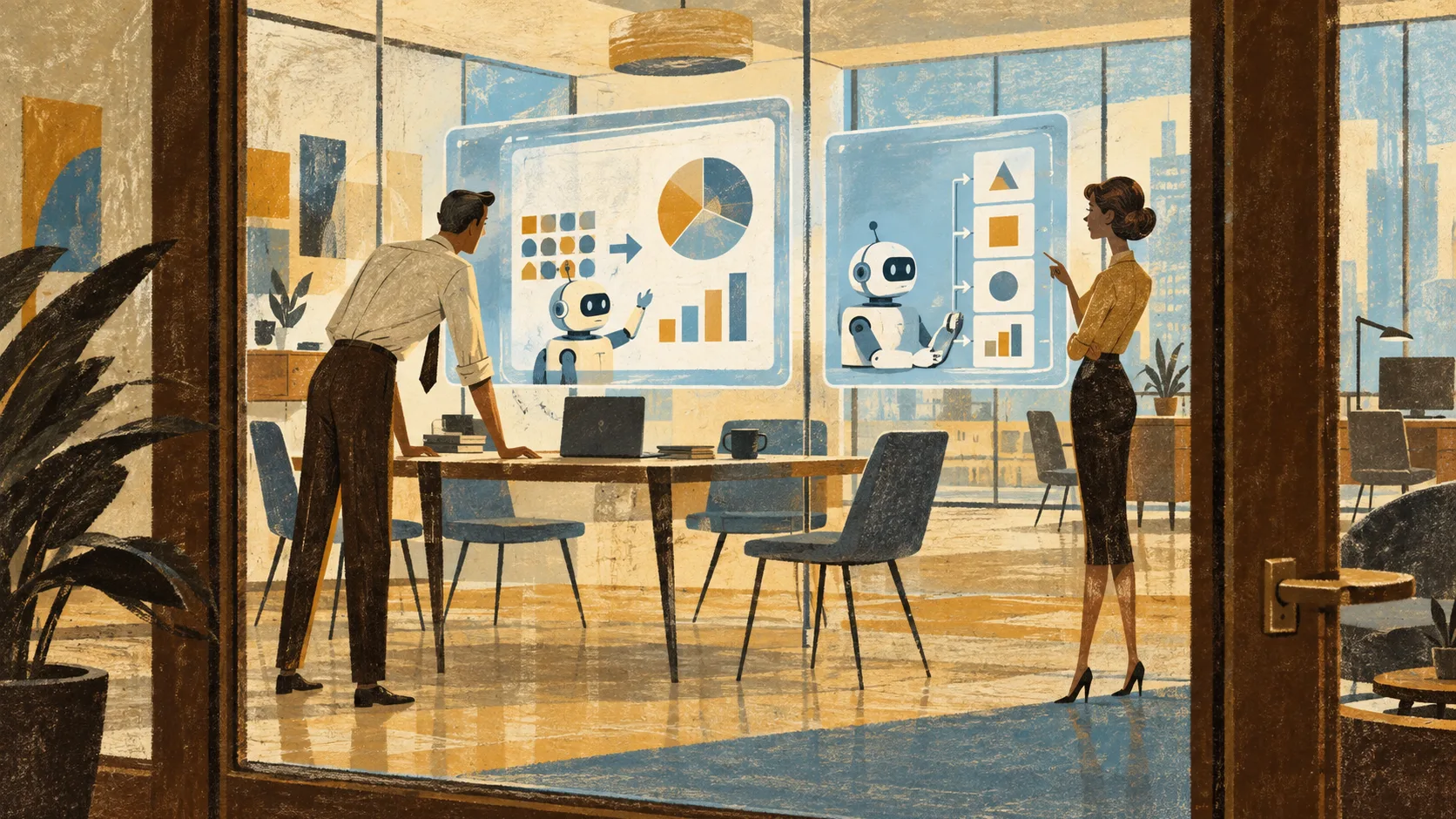

Autonomous artificial intelligence agents are entering corporate workplaces as digital coworkers. These systems run on large language models and complete tasks independently. A tsunami of companies now sell the services of these digital employees.
Boston Consulting Group surveyed managers
Julie Bedard, a partner at Boston Consulting Group, noted a lack of language three years ago regarding how people spoke about AI at work. ChatGPT adoption had convinced executives that the technology brought exponential productivity improvements. In January, Bedard and colleagues polled 1,261 managers. The poll showed that 22 percent of organizations had added AI agents to corporate org charts.
Microsoft launched Scout in June
Platforms like Microsoft Copilot and Google Gemini for Workspace originally launched in 2023 as tools for employees. In June, Microsoft launched Scout to complete tasks like rescheduling meetings and drafting emails. Omar Shahine, corporate vice president of Microsoft Scout, stated that companies essentially hire assistants that work when humans do not.
Startups create human-like AI agents
Companies design agents with human-like traits to encourage workers to anthropomorphize them. Dhruv Amin, CEO of vibe coding startup Anything, launched a platform called Skydive in August. Skydive agents have names, roles, and cloud computers, and use Muppet-esque avatars. Christine Wendell, CEO of Pronto Housing, uses Skydive agents for writing contracts and scheduling meetings. Engineering teams at Pronto reported working directly with an AI agent named Alice.
Anthropomorphizing AI carries specific risks in the workplace. Research from Julie Bedard and her BCG colleagues found that managers caught 18 percent fewer errors when told work was done by an AI employee rather than an AI tool. Sarah Franklin, CEO of HR company Lattice, raised concerns about the neurological and behavioral repercussions of emotional connections to AI.