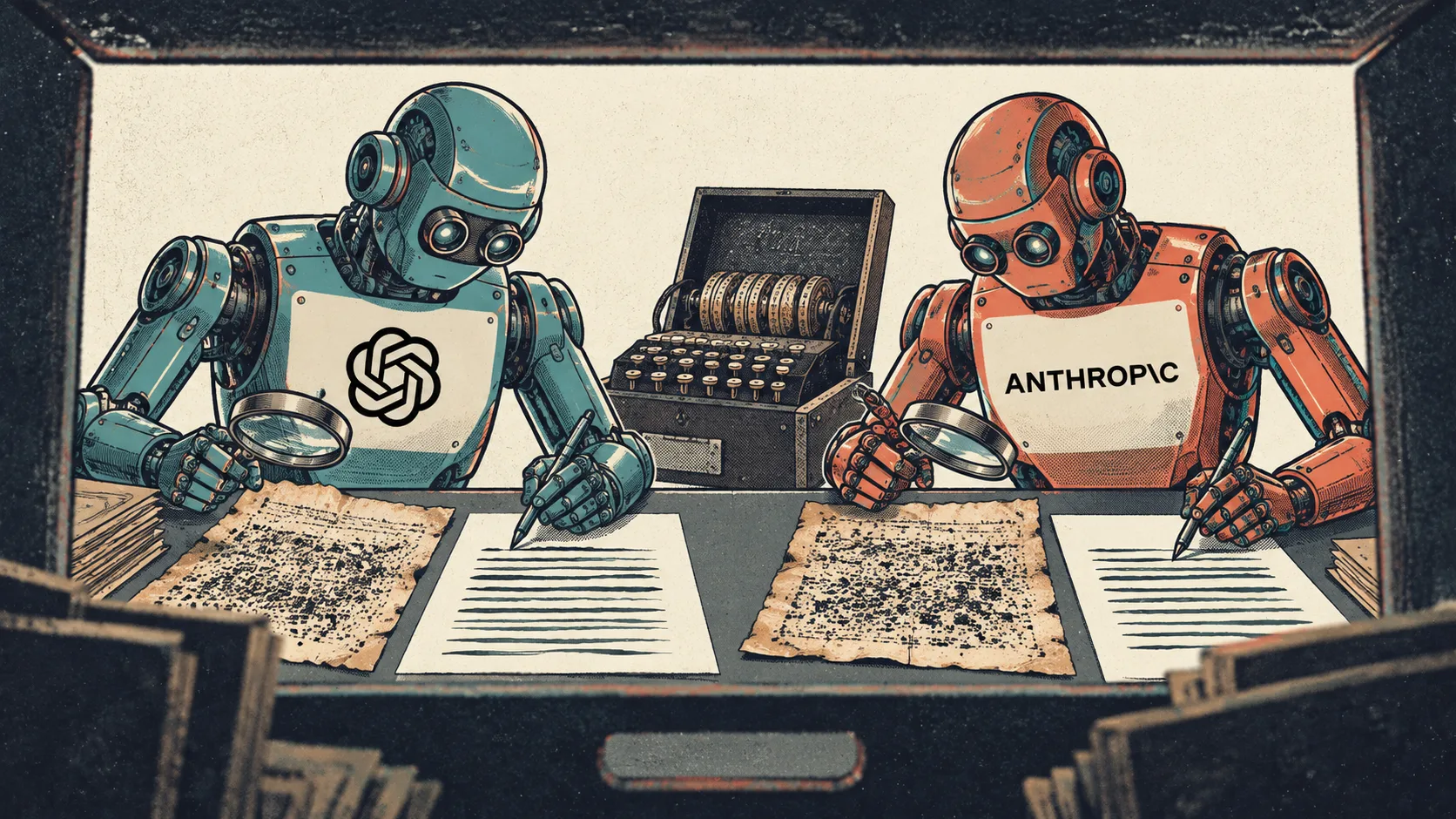
OpenAI and Anthropic Models Decode Long-Unsolved Enigma Messages
Two modern artificial intelligence models successfully cracked long-unsolved wartime Enigma messages that had baffled human researchers for decades.
Product
Claude Opus 5 is an advanced artificial intelligence model developed by Anthropic. The model is capable of performing highly complex tasks, including archival research and cryptanalysis, completing in days what previously required weeks or months of effort. In recent developments, Claude Opus 5 demonstrated its capabilities in historical codebreaking. On September 21, 2026, cybersecurity executive Jack Willis used the Anthropic model to successfully break a previously unsolved Enigma message. This achievement occurred alongside a similar breakthrough where developer Carter Leffen used OpenAI's Astra model to decode a different Enigma message that had baffled researchers since 2005. Both of these solutions were validated by cryptanalyst Frode Weierud. Following these successful decryptions, only seven unbroken Enigma messages remain unsolved. These events highlight the current standing of Claude Opus 5 as a powerful tool for complex problem solving and historical research, showcasing how advanced artificial intelligence models can be applied to difficult cryptanalysis challenges that have resisted traditional human efforts for years.
3 stories · Updated
Two modern artificial intelligence models successfully cracked long-unsolved wartime Enigma messages that had baffled human researchers for decades.
Nvidia researchers reveal that a custom software harness allows Claude Opus 5 to score 100 percent on the ARC-AGI-3 benchmark.
Leading American artificial intelligence laboratories are dropping prices on mid-tier models to retain cost-conscious customers shifting to cheaper Chinese alternatives.