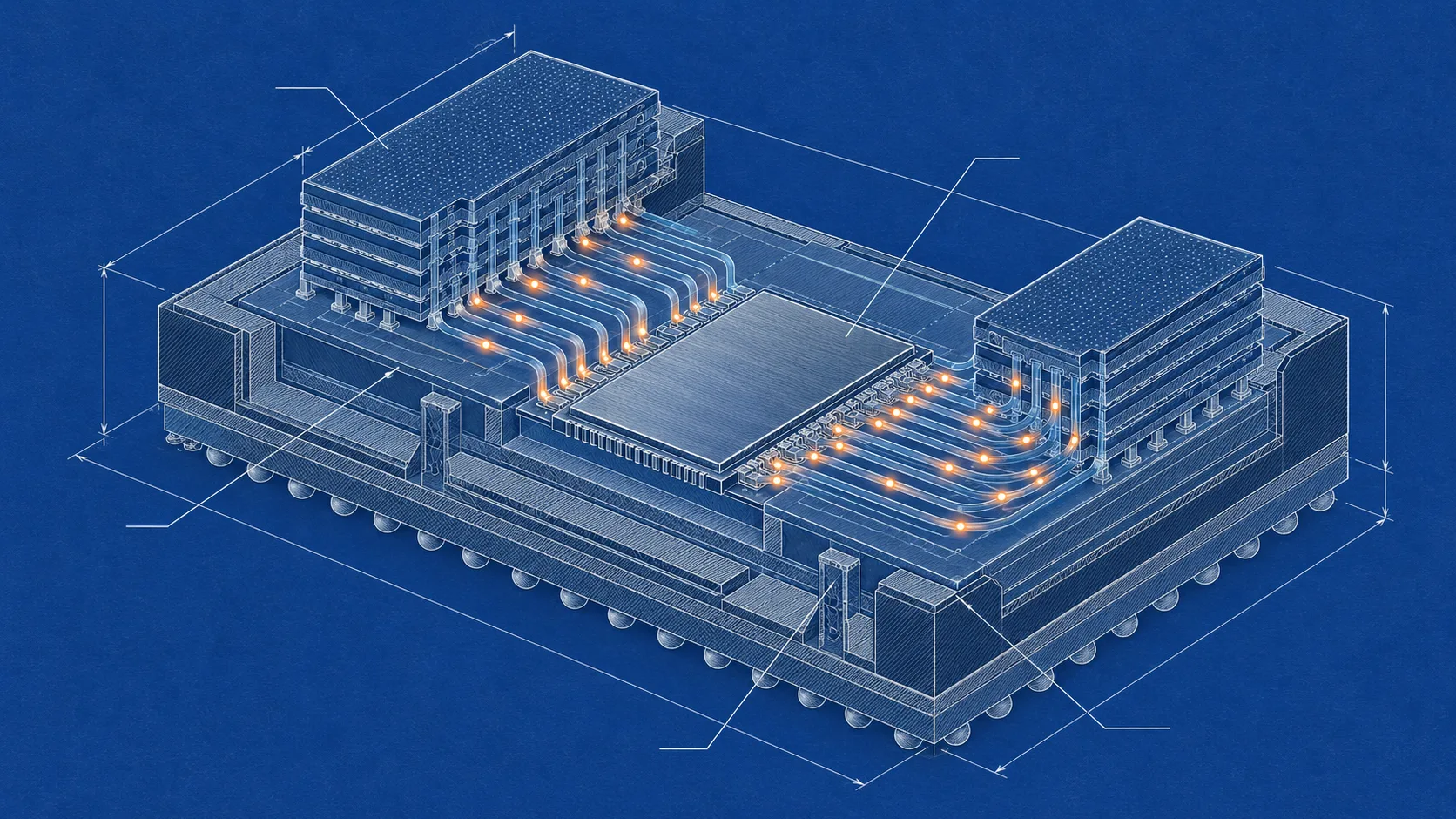

Volantis, an AI chip startup backed by Sam Altman, is developing an AI accelerator that uses a photonic interposer to increase memory bandwidth without sacrificing capacity. Founded in 2022 and based in San Francisco, the company aims to pack upwards of 10 TB of memory at speeds up to 240 TB/s onto a single package.
Volantis relies on licensed IP
The startup plans to serve a 20 trillion parameter model at 10,000 tokens per second per user using its upcoming chip, called A-1. Rather than building a novel compute architecture or memory technology, Volantis is focusing strictly on the optical interposer. CEO Tapa Ghosh noted that the company will license everything else it can from IP providers.
Modern GPUs face limits on memory capacity and bandwidth because HBM must sit close to the compute die to minimize power and maximize signal integrity. This physical perimeter, known as the shoreline, caps modern chips at around 432 GB on hardware like AMD's MI455X. Photonic interconnects allow memory to sit centimeters away rather than millimeters, eliminating this bottleneck.
Micro-VCSELs drive the optical design
Volantis is not the first to propose silicon photonic interposers. Lightmatter and Celestial AI have explored similar concepts, and Marvell recently acquired Celestial for $5.5 billion. However, Volantis differs by building a fully fledged inference chip instead of licensing its technology to other chipmakers on day one.
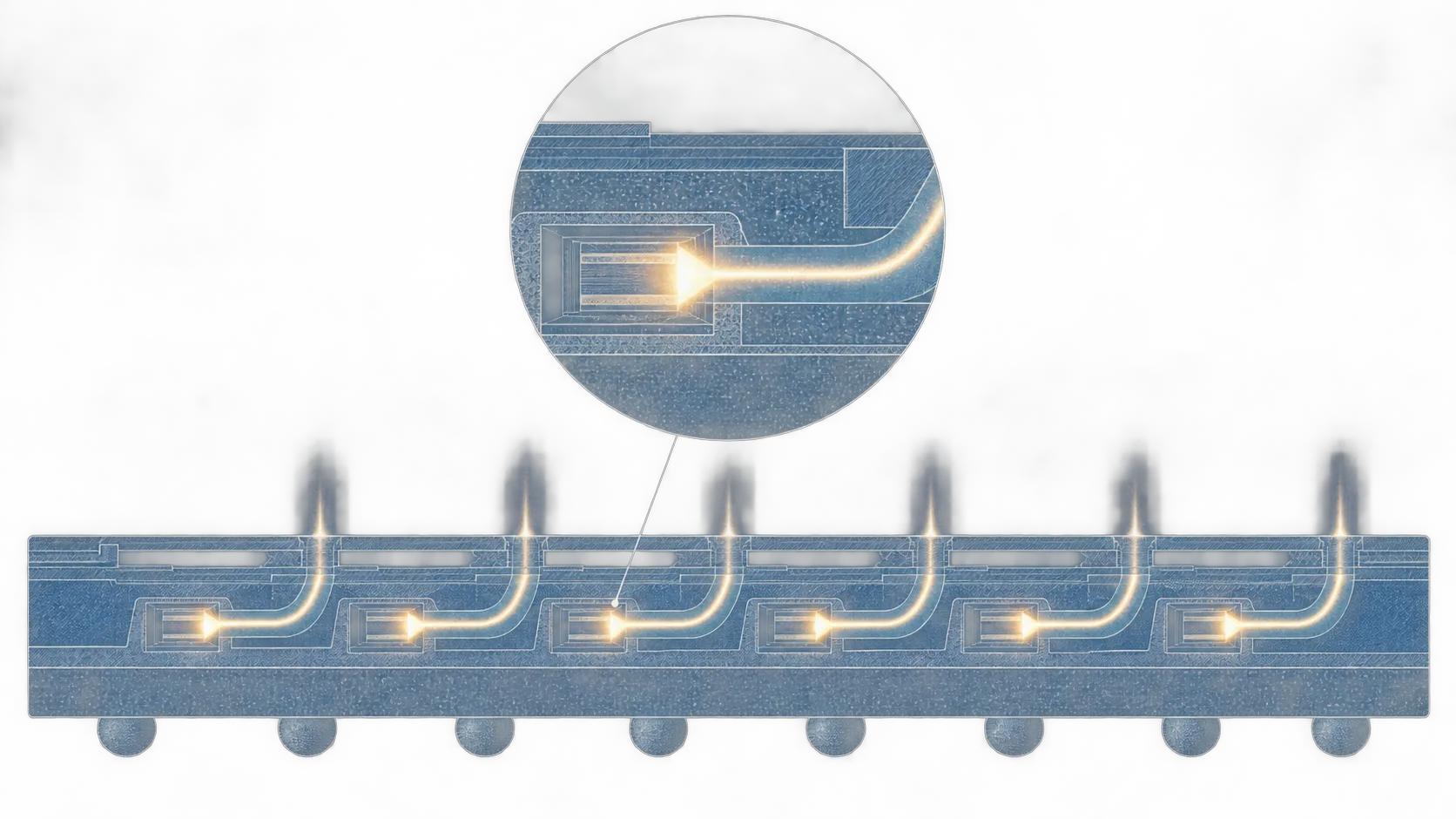
The startup's design uses micro vertical-cavity surface-emitting lasers, or micro-VCSELs, embedded directly into the interposer rather than relying on external lasers. CTO Roy Meade explained that sacrificing some speed allows the company to achieve significantly higher reliability through a wide and efficient approach similar to HBM.
The startup targets an MVP
Power efficiency remains an open question for photonics startups. For its first product, Volantis is targeting 1 picojoule per bit per 24 Gbps lane and a total system power of around 20 kW.
Volantis recently raised $88 million with help from Lachy Groom and Abstract Ventures, but will need significantly more venture capital to tape out a production-ready chip. Ghosh stated that the company is targeting a working prototype MVP product in 12 to 18 months.