
The US government wants to spend $30.3 million over the next five years on an improved form of lie detector. A Department of Defense budget request details the program, called Polygraph+ or Polygraph Next. The initiative focuses on artificial intelligence scoring algorithms and standoff sensing, which gathers physiological readings without attaching a device to a person.
Inside Defense first reported the budget document. The project aims to modernize federal polygraph and credibility assessment technologies to improve accuracy and reliability. Legal scholar Kyri Kotsoglou from Northumbria University calls the project a misguided effort to reduce the complex to something tangible.
The push coincides with high tension inside the department. Defense Secretary Pete Hegseth has increased reliance on polygraph tests to locate sources of alleged leaks to the press. Around 50 Joint Staff officers received polygraph tests in September after news coverage revealed depleted US weapons stockpiles during the war with Iran.
The Defense Counterintelligence and Security Agency will run Polygraph+ for federal background checks and insider threat detection. Congress has not yet approved the budget document. The DCSA did not respond to requests for more information about the specific technologies.
The Defense Innovation Unit ran an open submission process in 2023 for deception detection products. It selected Presage Technologies, which measures heart rate and breathing via standard cameras, and Altec Research, which tracks head movement, facial skin temperature, and pore activity. The companies and the DIU declined to comment.
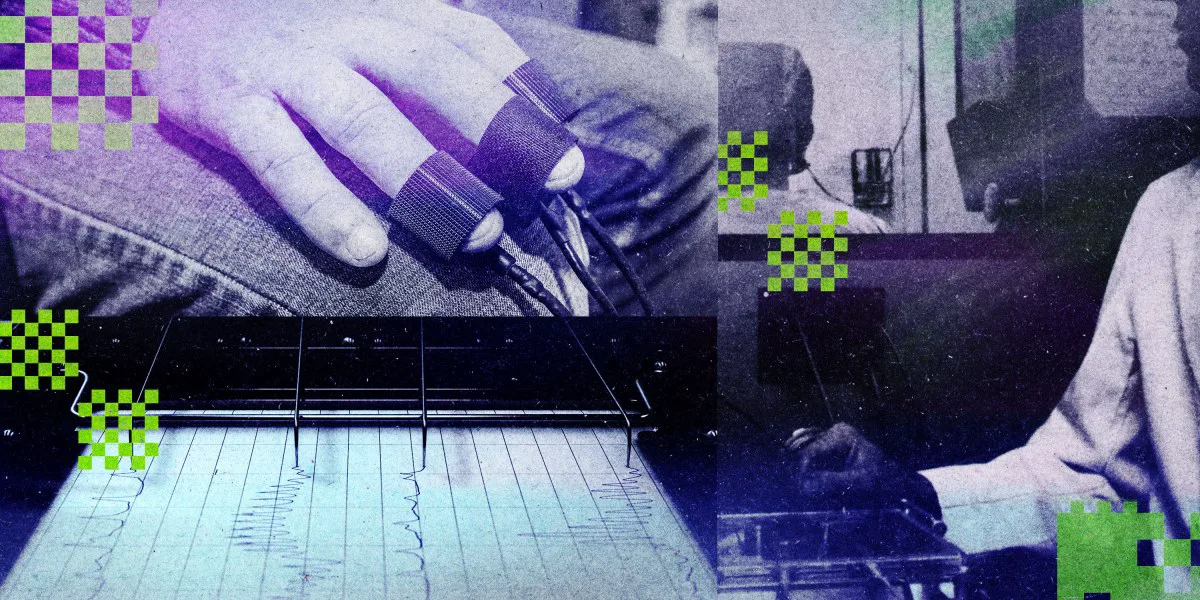
Traditional lie detection relies on blood pressure, pulse, breathing, and sweat measurements largely unchanged since the 1920s. Examiners judge veracity by comparing physiological responses between baseline and target questions. The federal government conducts tens of thousands of these tests annually despite repeated challenges to their reliability.
Congress Office of Technology Assessment questioned polygraph screening in 1983. The US National Research Council stated in 2003 that evidence for polygraph efficacy was weak at best. Humans spot lies just over half the time without technical help, while the American Polygraph Association claims 80% to 94% accuracy.
Past attempts at new lie detectors using thermal cameras, pupil trackers, and brain scans failed outside the lab. Experts note that no universal telltale sign of lying exists for everyone. AI could theoretically identify hidden patterns and combine physiological stress, cognitive load, and concealment efforts into a single score.
Kotsoglou warns that combining AI and polygraphs creates the worst of both worlds by adding uncertainty. Law professor Marion Oswald suggests the new tools will serve more as psychological props or threats to intimidate workers than as scientific instruments.
Congress must still approve the budget request for the project.