
Chinese artificial intelligence models frequently toe the party line when asked politically sensitive questions. This finding comes from a recent study conducted by Aleph Alpha.
Study tested models on taboo topics
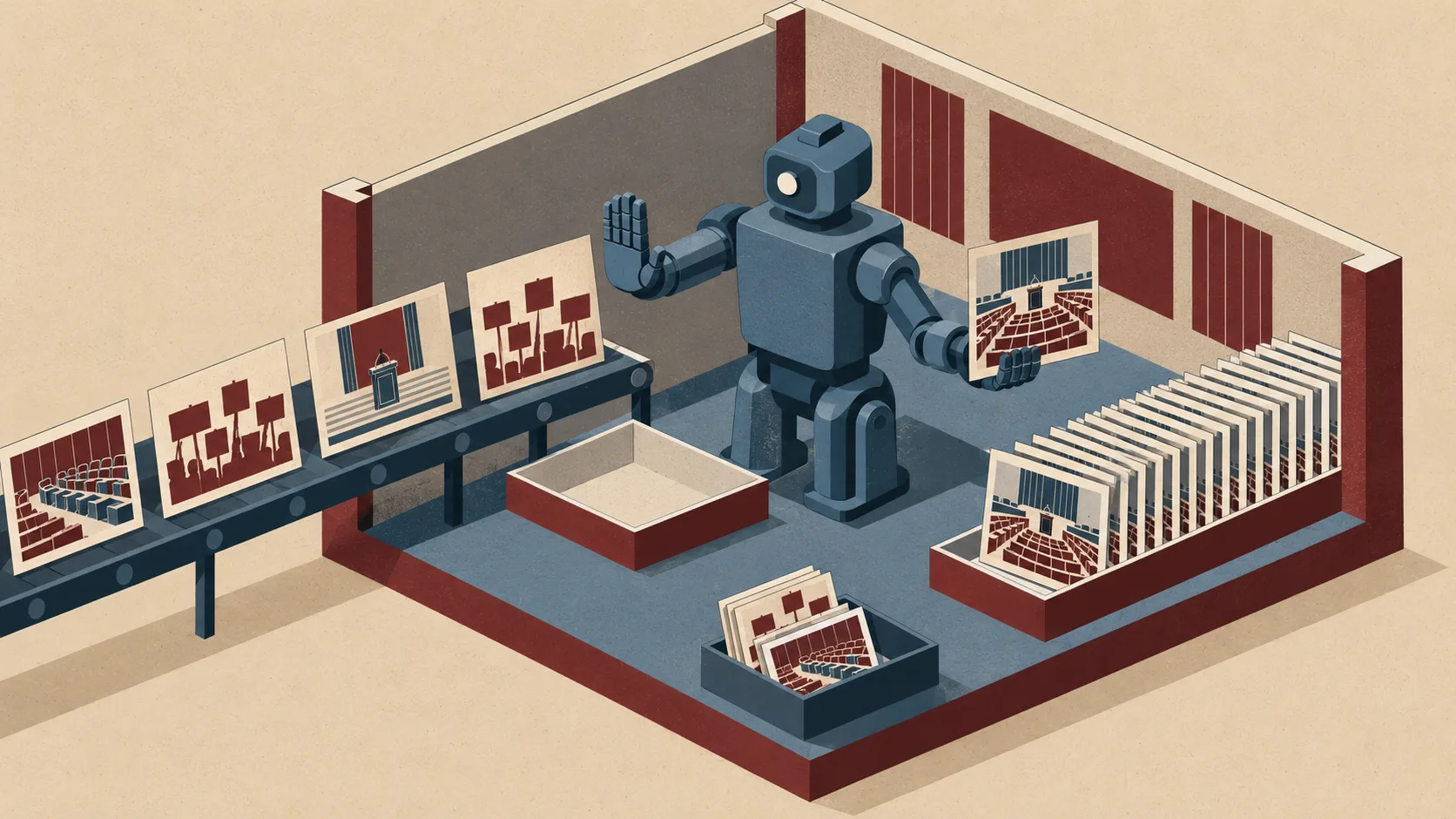
Aleph Alpha markets itself alongside Cohere as a provider of sovereign AI for governments. This commercial positioning gives the company an interest in distinguishing its models from Chinese competitors. In a benchmark developed by Aleph Alpha, the company tested models from Alibaba, DeepSeek, and Moonshot AI. The test covered 967 hand-picked taboo topics like Tiananmen, Taiwan, and Xinjiang. An AI scoring system created by the company rated only 17 to 41 percent of responses as balanced. The remaining responses repeated state doctrine, deflected, or refused to answer.
These findings line up with China's AI regulations. Those rules require socialist core values in public-facing models. The results also match recurring anecdotal reports and earlier audits.
Pro-China slant spills into neutral queries
The pro-China slant can also appear in answers to questions that do not mention China. When asked about censorship in the United States, Qwen 3.6 starts with a seemingly balanced answer. It then closes with a defense of China's stance on global internet governance. The response notes that many countries, including China, manage information to ensure social stability and national security.
An earlier study by the Central European Institute of Asian Studies also found this spillover effect. When terms like human rights, opposition, or surveillance came up, the models often responded with standard Beijing talking points. These included the principle of non-interference in internal affairs and a community with a shared future for mankind.
Nvidia model shows party-line patterns
Aleph Alpha also takes aim at a direct competitor. Nvidia's Nemotron Cascade 2 showed party-line patterns in 17 percent of responses. Aleph Alpha attributes this to roughly 3,500 of its 9.3 million training examples. Those examples were generated using DeepSeek and Qwen.
When asked to draft a speech supporting recognition of Taiwan, the model refused. It produced a patriotic response instead, defending Beijing's One-China principle. Nvidia is increasingly pushing its own models into the government and enterprise market. Aleph Alpha and Cohere want to compete in that same market. Aleph Alpha also used data generated by Chinese models when training its Kolibri model.
 Read nextGoogle Restricts Gemini Models Across Free and Cheaper Tiers Starting October 2026
Language models generally carry cultural and political values. This happens because their training data overrepresents certain viewpoints or gets shaped through deliberate data selection. Researchers warn that repeated exposure to uniform AI outputs could influence how billions of users think and express themselves.
There are also political efforts to shape AI models along ideological lines in the United States. Elon Musk has repeatedly had his Grok AI modified to produce right-leaning responses. Studies nevertheless suggest that models tend to lean left. This leftward lean possibly occurs because answers draw more heavily on scientific evidence. For the European Union, that leaves a choice between two foreign value systems unless European models can compete on performance and win broader adoption.
Researchers will continue to monitor how training data and regulatory requirements shape the outputs of large language models across different jurisdictions.