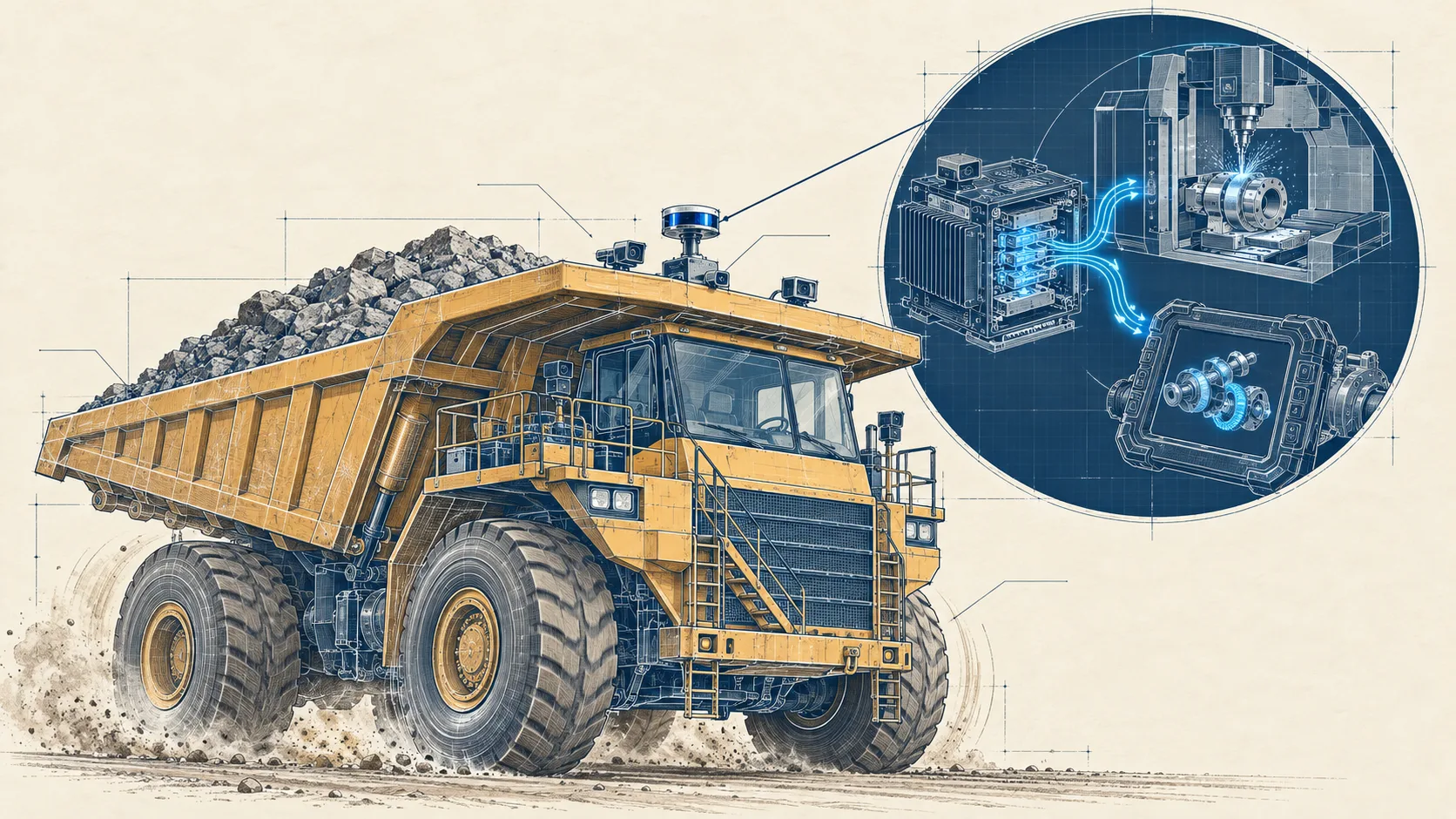

Many companies struggle to integrate artificial intelligence into daily operations. Industrial giant Caterpillar spent decades solving a similar problem in the physical world. The company is now applying those lessons to its broader artificial intelligence strategy.
Caterpillar started its automation push in mining. Labor shortages and dangerous conditions made automation necessary in this sector. Today, the company sells automated haul trucks, drilling equipment, underground loaders, and dozers. It also provides remote-controlled construction equipment along with software command centers and fleet management tools.
CTO Jaime Mineart spoke with TechCrunch at the Ai4 conference in Las Vegas earlier this month. Mineart stated that the company can now take learning from mining and bring it into dynamic environments like quarries and construction sites.
The company applies AI to employee tools
The company is applying artificial intelligence more broadly across tools for technicians and employees. The Cat AI Assistant allows field technicians to use voice commands while standing next to a machine. Workers can pull up repair procedures, troubleshoot problems, and identify needed parts before starting work.
This assistant relies on Caterpillar proprietary data. The company connects about 1.6 million assets globally. These assets generate more than 16 petabytes of structured data.
Caterpillar also uses artificial intelligence for site scanning software. It generates digital twins in manufacturing to analyze operations. Enterprise operations and software development also benefit from the technology.
Mineart noted that software development utilizes artificial intelligence agents. These agents modernize legacy code, generate and test new software, and catch defects earlier.
Deploying technology requires workplace shifts
However, building the technology is only part of the challenge. Deploying autonomous machines requires transforming entire worksites. Companies must rethink human workflows and existing processes.
Caterpillar relies on experienced operators to train artificial intelligence systems. Operators may eventually oversee multiple machines from remote command centers instead of driving single units.
This workplace shift creates training needs for the workforce. Caterpillar employs 118,000 workers. The company plans to spend $100 million over the next five years to train employees in artificial intelligence, autonomy, and robotics.
 Read nextGrok Voice 3.0 tops Artificial Analysis speech-to-speech index
Infrastructure demand drives record revenue
This operational pivot aligns with a broader boom in infrastructure demand. Caterpillar reported a record quarterly revenue of $20.5 billion in the second quarter. Strong demand for power-generation equipment used in data centers drove this growth.
Sales in the power-generation division jumped 72% to $3.10 billion. CEO Joe Creed stated that demand for cloud computing and generative AI infrastructure is not slowing down.