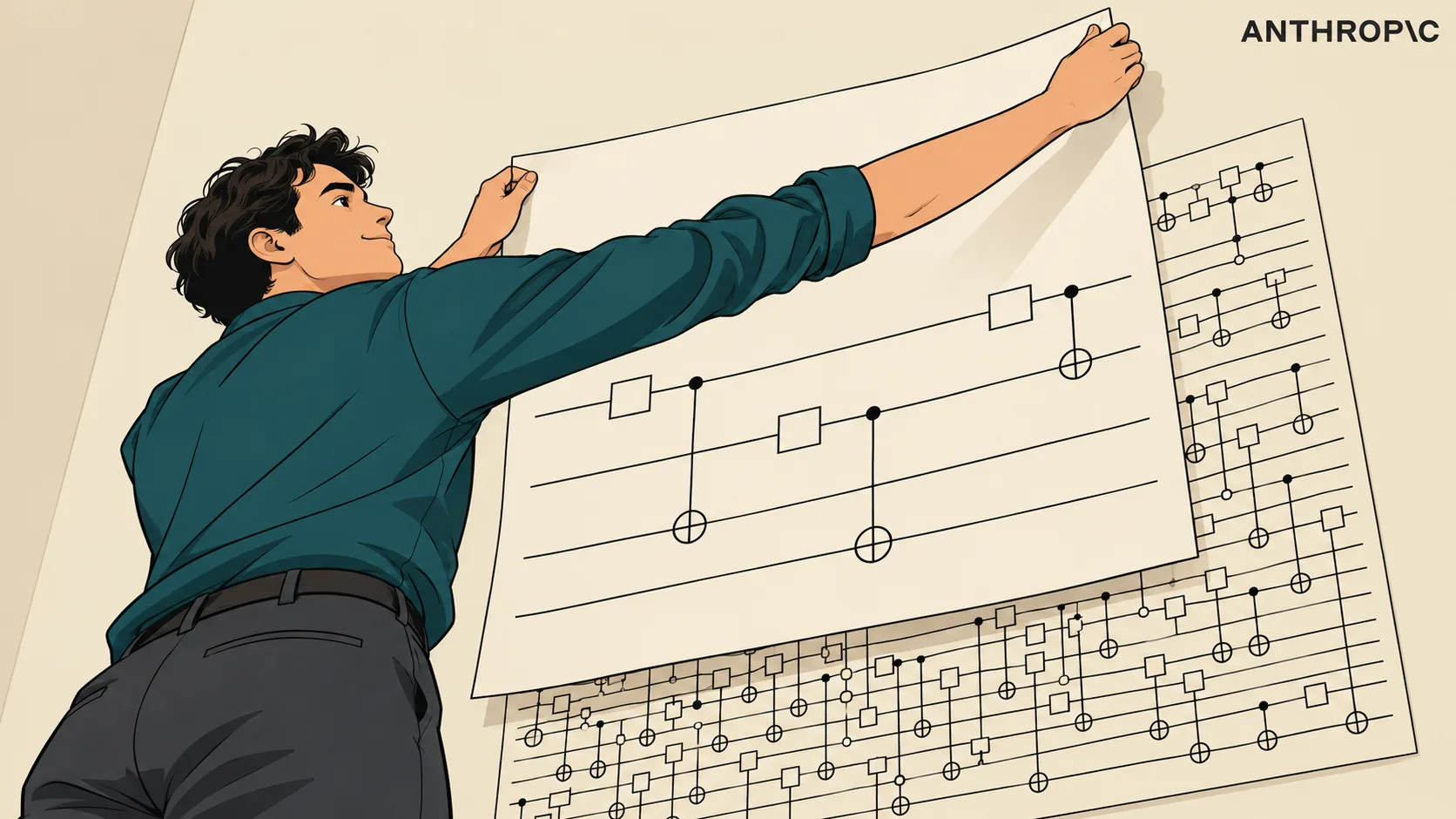

Anthropic says Claude Mythos 5 designed quantum circuits for eight computing tasks that use fewer qubits and fewer gates than the best previously published designs. The tasks cover chemistry, optimization, quantum simulation, number theory and numerical computing.
Quantum circuits are sequences of operations that run on qubits. Using fewer qubits and gates could reduce the resources needed to run an algorithm. Anthropic says some of Claude’s designs improved on published circuits by an order of magnitude or more.
The researchers gave Claude plain-language descriptions of what each circuit had to do. An automated evaluator checked its proposals and scored them using the number of qubits multiplied by the number of gates. Claude then used that feedback to revise its designs without human input between rounds, according to Anthropic.
Claude worked on point addition for 53 hours
One task involved point addition, a repeated step in quantum algorithms that use elliptic curves. Anthropic says Claude worked on it for 53 hours with minimal human input, consisting of an initial brief and occasional prompts to think more broadly. It developed a way to run a method called divsteps in reverse without storing a full record of its earlier decisions. The team checked the resulting formula through numerical simulations and a proof formalized in Lean.

The new approach offers a choice between qubit use and gate count. Compared with the smallest previous design, one circuit uses 12% more qubits but 17 times fewer gates, Anthropic says. The company also reports that Claude made the costliest step of a quantum optimization algorithm called decoded quantum interferometry about 12 times cheaper.
The full paper is available on arXiv
The work was led by Andi Gu through Anthropic’s STEM Fellows Program, with mentorship from Anthropic quantum physicist Alek Kemeny and collaboration with Susanne Yelin of Harvard University and Mikhail Lukin of Harvard University and QuEra Computing. Anthropic says the full paper is available on arXiv.